
The sudden blockade of the Strait of Hormuz has sent a massive shockwave through the global economy, effectively severing a corridor that facilitates twenty percent of the world’s oil and a quarter of its liquefied natural gas supply. This tactical maneuver by Tehran, occurring in early March 2026, transformed a localized military confrontation with the United States into a systemic crisis that challenges the very foundations of international trade and maritime security. As American forces respond to strikes on strategic bases throughout the Gulf, the private sector finds itself caught in a crossfire that is both physical and financial. Markets that once relied on the predictability of the Middle Eastern energy corridor are now scrambling to adapt to a reality where the free flow of goods is no longer a given. The immediate surge in crude prices and the suspension of production at key facilities, such as those operated by QatarEnergy, underscore the fragility of a global logistics network that has been optimized for efficiency rather than resilience. This environment of heightened hostility is forcing a total reassessment of how assets are deployed and protected across the most volatile regions of the world.
Reassessing Maritime Risks and Logistics
The Economic Burden: Rerouting and Supply Chain Delays
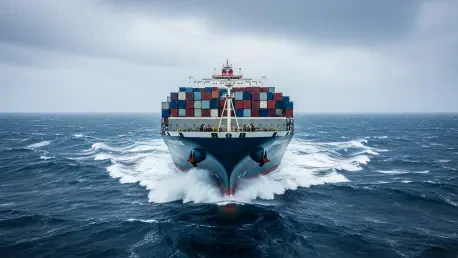
Major shipping lines like Maersk and MSC have proactively diverted their fleets away from the Persian Gulf, opting instead for the grueling journey around the Cape of Good Hope to maintain a semblance of connectivity between East and West. This detour adds approximately 3,500 nautical miles to a standard voyage from Asia to Northern Europe, which translates into an additional ten to fourteen days of transit time for critical cargo. The sheer scale of this rerouting has created a massive spike in operational overhead, as vessels consume significantly more fuel and crews require extended compensation for the prolonged duration at sea. Furthermore, the sudden shift has drained the available pool of charter vessels, leading to a scarcity of capacity that has driven spot rates to levels not seen since previous global supply chain disruptions. This logistical bottleneck is not just a maritime issue; it is a manufacturing crisis, as industries reliant on just-in-time inventory find their production lines stalled by the absence of essential components.
Beyond the immediate increase in fuel consumption, the environmental and maintenance implications of long-haul rerouting are becoming a significant concern for international logistics coordinators. Older vessels, which were never designed for the harsh conditions of the open Atlantic and Indian Oceans over extended periods, are experiencing higher rates of mechanical failure, further straining the global repair infrastructure. Ports in Southern and Western Africa, such as Cape Town and Walvis Bay, are seeing an unprecedented influx of traffic, leading to congestion as these facilities struggle to provide bunkering services and supplies to thousands of diverted ships. This geographic shift in maritime activity is also altering the competitive landscape for regional trade hubs, as the traditional dominance of Mediterranean and Middle Eastern ports is temporarily eclipsed by the necessity of the African route. The resulting delays are cascading through the retail sector, where seasonal goods and perishable items are arriving late, forcing businesses to write off inventory and adjust consumer expectations.
The Financial Void: Collapse of Traditional Insurance Protections
The insurance industry is currently undergoing a radical transformation as the Gulf is officially designated as a high-risk combat zone, leading to the widespread withdrawal of standard war-risk coverage. Companies like Skuld and the Arab War Risks Insurance Syndicate have implemented drastic measures, issuing cancellation notices that give shipowners a mere seventy-two-hour window to renegotiate terms or leave the area. This aggressive posturing reflects a deep-seated fear among underwriters that the current conflict could lead to a total loss of assets on a scale that would threaten the solvency of even the most well-capitalized insurance pools. For those operators who choose to remain in the region or are forced to transit high-risk waters, the cost of protection has become nearly prohibitive, with premiums rising by as much as fifty percent overnight. This financial barrier is effectively blockading the region more efficiently than any naval force could, as many commercial lenders refuse to allow their financed assets to enter zones where insurance coverage is either nonexistent or financially unsustainable.
This vacuum in the insurance market has forced a shift toward specialized and high-cost vessel seizure policies, as the threat of state-sponsored detention becomes a primary concern for operators. The legal framework surrounding force majeure is being tested in courts worldwide, as shipowners and cargo interests dispute who bears the burden of these astronomical insurance costs and the subsequent delays. Many standard contracts did not account for a systemic failure of the insurance market on this scale, leading to a wave of litigation that could take years to resolve. Meanwhile, smaller shipping companies, lacking the massive cash reserves of industry giants, are being forced to ground their fleets entirely, unable to absorb the risk or the cost of entry. This consolidation of the market is likely to have long-term effects on competition, as only the largest entities can afford to navigate the financial minefield that the Middle Eastern waters have become. The resulting lack of competition in specific trade routes is further driving up the cost of consumer goods across the globe.
The Broadening Scope of Global Financial Instability
Modern Warfare: Emerging Non-Kinetic Threats and Sectoral Contagion
Modern warfare in the Gulf has introduced a layer of complexity that goes far beyond the physical threat of missiles, as electronic warfare and cyberattacks become standard tools of regional disruption. Insurers are now forced to price in non-kinetic risks, such as sophisticated GPS jamming that can lead to navigational errors and groundings, or the potential for malware to take control of automated cargo handling systems. These threats are particularly insidious because they are difficult to attribute and can affect vessels far away from the actual kinetic combat zones. The maritime industry is finding that its increasing reliance on digital connectivity has created a new set of vulnerabilities that traditional hull and machinery policies were never designed to cover. As a result, a new market for geopolitical cyber-risk is emerging, where premiums are tied to the real-time intensity of electronic interference in specific corridors. This development represents a permanent shift in how risk is managed in an interconnected world, where a line of code can be just as destructive as a kinetic warhead.
The volatility is not confined to the sea; it is rapidly spreading to the aviation sector and land-based infrastructure, creating a multi-sectoral crisis that is straining the global reinsurance market. With the closure of critical airspace over the Gulf states, international airlines are being forced to reroute long-haul flights, significantly increasing fuel burn and disrupting global travel hubs. Aviation insurers are now reassessing policies for aircraft that are grounded in potential conflict zones, while simultaneously raising premiums for flights that must skirt the edges of active war zones. On the ground, the risk of collateral damage to high-value assets such as energy terminals, luxury hotels, and logistics centers has led to a surge in claims related to political violence and property damage. This multi-impact event is unique in its breadth, as it triggers simultaneous losses across diverse insurance lines, from trade credit to hull and aviation, potentially leading to a liquidity crunch for insurers who find themselves hit by a perfect storm of claims from every direction.
Economic Fallout: Long-Term Inflationary Pressures and Outlook
As the conflict persists, the global economy is beginning to feel the weight of total risk saturation, where the cumulative cost of security, insurance, and logistics begins to stifle growth and drive up inflation. Trade credit insurers, who provide the financial backbone for global commerce by protecting against corporate defaults, are tightening their terms as they anticipate that businesses will struggle to meet obligations amid rising energy costs. This environment suggests a future where the free flow of commerce is no longer a certainty but a high-priced luxury that only the most resilient economies can afford. The resulting inflationary pressures are expected to be felt globally, as the cost of everything from gasoline to consumer electronics rises to reflect the new reality of high-risk trade. If the Strait remains closed and the conflict escalates further, the world may see a fundamental decoupling of trade routes, with nations seeking to build shorter, more secure supply chains that are less dependent on the volatile chokepoints of the Middle East.
This shift toward regionalization and domestic production may provide some long-term stability, but in the short term, it represents a massive disruption to the globalized economic order that has defined the last several decades. Financial analysts are warning that the traditional safety nets of the international banking and insurance systems were not designed to withstand a prolonged period of total risk saturation. As capital retreats from high-risk areas, the resulting investment vacuum could lead to further instability in emerging markets that are heavily dependent on trade through the Gulf. The overarching trend is one of fragmentation, where the global trade environment is becoming increasingly expensive, litigious, and unpredictable. For businesses and governments alike, the primary challenge moving forward will be to build redundant systems that can operate independently of traditional maritime arteries. The current crisis serves as a stark reminder that in an interconnected world, a regional conflict can quickly become a global economic emergency, necessitating a complete overhaul of risk management strategies for the modern era.
To mitigate these systemic vulnerabilities, organizations shifted toward a dual-strategy of diversifying maritime routes and adopting advanced predictive analytics to forecast geopolitical shifts. Logistics managers implemented real-time tracking systems that utilized low-earth orbit satellite constellations to bypass local GPS jamming, ensuring that vessels maintained accurate positioning even in high-interference zones. Furthermore, the insurance industry began developing parametric coverage models that triggered immediate payouts based on specific conflict indicators, providing the liquidity necessary for companies to pivot their operations rapidly. Governments also took steps to expand strategic petroleum and gas reserves, reducing the immediate leverage held by those who controlled maritime chokepoints. By prioritizing logistical flexibility over raw efficiency, the global trade network started to develop the resilience needed to survive a period of prolonged regional instability. These actions moved the focus from reactive crisis management to proactive risk mitigation, ensuring that essential goods continued to flow despite the persistent threat of military escalation.