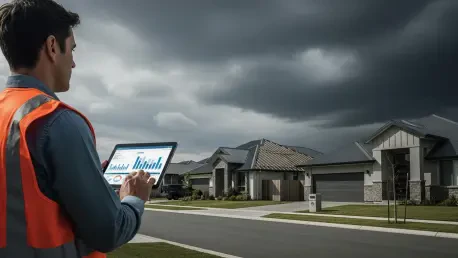

The traditional white picket fence has long stood as a symbol of domestic stability, but for many American families today, the greatest threat to that dream is not a market crash but the escalating cost of keeping a roof insured. While homeowners once viewed insurance as a predictable utility, recent shifts have turned it into a primary financial obstacle. Over the past five years, premiums have climbed by nearly 46%, a trajectory that has left household income growth in the rearview mirror and forced a radical recalculation of what it means to afford a home.
This fiscal squeeze is transforming the very nature of property ownership. As rates continue to climb, the math of the monthly mortgage payment is being rewritten, with insurance now acting as a volatile variable rather than a fixed certainty. For the middle class, this “premium creep” is more than just an accounting nuisance; it is a fundamental erosion of the security that homeownership was once guaranteed to provide.
The Quiet Erosion of the American Dream Through Monthly Premiums
The rising cost of protection is no longer a peripheral issue, as insurance now consumes roughly 21% of the average monthly mortgage payment. This shift has created a silent crisis where the expense of maintaining a home often rivals the cost of the loan itself. Homeowners are finding that even with a fixed-rate mortgage, their total housing expenditure can swing wildly from year to year based on actuarial adjustments they cannot control.
Market data reveals a growing sense of desperation among policyholders who are struggling to balance these new costs. Nearly 30% of homeowners have admitted they would consider dropping coverage entirely to save money if their lenders permitted such a risk. This sentiment reflects a dangerous tipping point where the financial safety net designed to protect wealth is instead perceived as a primary drain on household liquidity.
Why the Safety Net Is Fraying in a Warming World
The current instability is not a temporary fluctuation but a sustained five-year trend that shows little sign of slowing down. This surge is driven by a “perfect storm” where environmental volatility meets economic inflation. As weather patterns become increasingly severe, the price of labor and raw materials for reconstruction has reached new heights. Insurers are no longer just hedging against rare events; they are adjusting for a reality where billion-dollar disasters occur with relentless frequency.
Furthermore, the traditional models used to assess risk are being scrapped in favor of more aggressive predictive analytics. These new frameworks account for the rising costs of “secondary perils” that were once considered manageable. Consequently, the gap between historical premium averages and modern requirements is widening, leaving many providers to rethink their presence in high-risk markets entirely.
From Coastal Storms to Heartland Hail: The New Map of Risk
While Florida continues to lead the nation in high costs—with premiums reaching toward $8,500—the geography of risk is expanding into the American heartland. States like Minnesota, Oklahoma, and Colorado are seeing spikes of over 20% due to “convective storms” that bring devastating hail and tornadoes. These localized events now account for over $42 billion in annual insured losses, proving that no region is truly insulated from the changing climate.
In the West, the situation is equally dire as California prepares for some of the most aggressive rate hikes in the country. The recurring threat of wildfires has forced a total recalibration of property valuations and policy availability. This shifting map means that inland homeowners, who once felt safe from the hurricanes of the coast, are now facing the same financial pressures once reserved for beachfront properties.
The Financial Strain of a Mandatory Security Blanket
For many families, the insurance premium has become a decisive factor in whether they can stay in their homes or must sell. Financial analysts warn that the current trajectory could lead to a broader real estate instability, particularly in regions where the cost of coverage exceeds the owner’s ability to pay. When insurance becomes unaffordable, the underlying value of the property often takes a hit, as the pool of eligible buyers shrinks to those who can manage the high overhead.
Moreover, the psychological toll of this mandatory expense is mounting. Because lenders require insurance to protect their collateral, homeowners feel trapped by a bill they cannot negotiate or avoid. This has led to a shift in consumer behavior, where prospective buyers are now scrutinizing insurance quotes as closely as they examine school districts or property taxes before signing a contract.
Adaptive Strategies for Homeowners in a Volatile Market
To navigate this landscape, homeowners must transition from passive observers to active risk managers. Moving toward “home hardening” is becoming a necessity; installing impact-resistant roofs or creating defensible space around a property can lead to meaningful premium credits. Taking these proactive steps does not just protect the physical structure but acts as a critical hedge against the next round of rate hikes.
Prospective buyers were encouraged to treat insurance as a pre-approval hurdle rather than an afterthought. By investigating the insurability of a specific ZIP code before making an offer, savvy consumers ensured their dream homes did not become liabilities. Ultimately, adapting to this new environment required a mix of physical property improvements and a more rigorous approach to financial planning to ensure long-term stability in an unpredictable market.