
Two fires on tankers linked to sanctioned oil trades erupted within hours in the Black Sea, exposing how wartime hazards and opaque operators now intersect to create risks that stretch beyond normal playbooks for insurers and regulators. The episodes sharpened a debate that has simmered since the war in Ukraine reframed navigation in the region: when drifting mines and degraded safety regimes meet undocumented ownership and suspect certificates, even routine transits can tip into emergency. What began as distress calls from separate coordinates north of Turkey quickly evolved into case studies, not only in crisis response but in the limits of accountability when a vessel’s flag, class, or coverage cannot be trusted. The incidents became a proving ground for risk models, with responders focusing on crew safety while the market weighed how to price voyages through a corridor where hazards move and paperwork can evaporate overnight.
back-to-back incidents in the black sea
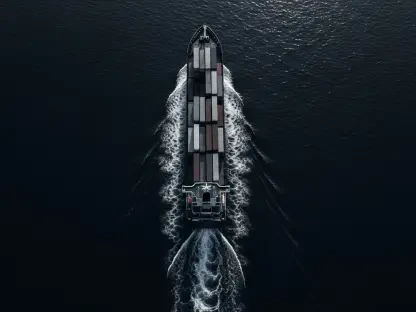
The 274‑meter Kairos was in ballast and bound for Novorossiysk when a distress call sounded roughly 28 nautical miles off Turkey’s coast, prompting a swift Turkish deployment that included rescue boats, a tug, and an emergency response vessel. Footage showed deck flames as crews were lifted clear; all 25 mariners were accounted for without injury, a notable outcome given the scale of the hull and the volatility of residues even on a ship not laden with cargo. Early radio exchanges pointed to an external event before the fire and to an engine‑room blast, yet attribution remained unconfirmed. Parallel reports hinted the hull could be compromised and at risk of sinking, reinforcing how initial minutes define both safety outcomes and the shape of subsequent claims, especially where a ship’s regulatory status is contested.
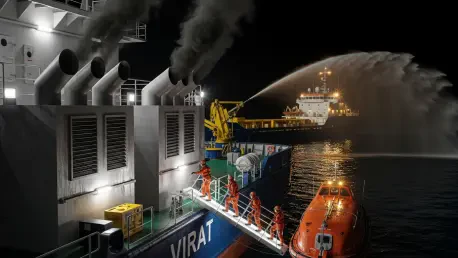
Further east, the aframax‑class Virat reported heavy smoke in its engine room about 35 nautical miles offshore, triggering an assist by a nearby commercial vessel that helped Turkish authorities secure the scene and evacuate all 20 crew. The two calls arrived close enough together to feel like a pattern, even as officials emphasized that coincidence should not be mistaken for causation. Traffic through the Bosphorus continued, an operational signal that containment had worked and that the primary choke point remained open. Yet the optics were inescapable: smoke plumes against a coastline accustomed to seeing merchant ships in orderly procession. That disconnect between normal flow and acute incident underscored the region’s new baseline, in which emergency response success can coexist with rising strategic risk.
the mine-strewn risk and shadow fleet vulnerabilities
Floating hazards have shaped the calculus since the first mines shook loose from moorings and began drifting well beyond intended fields. More than 100 have been detected, and merchant ships have suffered strikes, including a Panama‑flagged carrier in 2023 and an Estonian vessel that sank near Odesa in 2022. Turkey, Bulgaria, and Romania have maintained clearance operations, yet mobility and volume defy quick remediation. Analysts broadly attribute most mine‑laying to Russian forces, though definitive links to any single incident are rare, and the latest fires remained unassigned. In these waters, ordinary navigational prudence meets an elastic threat perimeter, so cause is often a mosaic of proximity, timing, and luck. That ambiguity complicates both technical investigations and policy decisions about routing, escorts, and premiums.
Shadow‑fleet dynamics intensify that ambiguity. Both the Kairos and the Virat have been associated with sanctioned Russian crude trades, a patchwork where ownership chains blur, insurance can be nonstandard, and oversight is uneven. The Kairos’s removal from the Gambian registry over allegedly fraudulent certificates illustrated how a ship can become effectively flagless in an instant, calling into question class, insurance, and seaworthiness certifications. When documentation is in doubt, even a textbook rescue can become the prelude to years of legal friction over jurisdiction, liability, and compensation. Experts have warned that older tonnage, high‑risk routing, and minimal transparency set the stage for serious casualties. In placid seas those traits are worrying; in a mine‑affected theater, they are combustible, raising the odds that a manageable incident cascades into a costly, prolonged loss.
what it means for insurers and the environment
For underwriters and brokers, these fires served as a live audit of model resilience. Traditional pricing leans on verified registries, recognized classification, and service histories that correlate to reliable loss curves; shadow‑fleet operations invert those assumptions. Underwriters face ambiguity over flag validity, class status, and policy enforceability, all before reaching the question of causation in a war zone riddled with mobile hazards. The result is a widening gap between conventionally managed hulls and sanction‑evading operators, with the latter encountering steeper premiums, narrower warranties, and outright exclusions for routes where mines have been reported. Registries and classification societies, aware of the reputational drag, have signaled tighter scrutiny of certificates and ownership disclosures, a shift that favors transparency while isolating opaque actors.
Environmental and navigational stakes remained central even as Bosphorus traffic held steady. Tanker fires, ballast or not, risk fuel leaks, hull breaches, and debris fields that complicate salvage in contested waters; if a casualty drifts toward clearance zones, mine‑countermeasure units face split priorities between ordnance and pollution control. Reports that the Kairos could be at risk of sinking raised practical questions about towing windows, safe havens, and liability for cleanup if corporate shells deflect responsibility. In the aftermath, the market’s next steps looked clearer: incorporate dynamic mine maps into voyage plans and wordings, require authenticated digital certificates for flag, class, and P&I, and mandate independent condition surveys for ships tied to sanctioned trades. Taken together, those measures pointed toward a path that prioritized verifiable compliance and adaptive risk pricing over hopeful assumptions.