
The quiet hum of a logistics warehouse can mask unseen threats, but when a communicable disease like tuberculosis surfaces among employees, the disruption sends shockwaves far beyond public health, exposing a critical and often overlooked vulnerability in a company’s financial armor. A recent outbreak at an Amazon facility in Coventry did more than trigger a National Health Service (NHS) response; it pulled back the curtain on the precarious state of workplace insurance, revealing a chasm between what businesses believe they are protected against and the harsh reality written in their policy’s fine print. This incident serves as a stark reminder that in the wake of a global pandemic, old assumptions about coverage for illness-related disruptions no longer hold, leaving unprepared companies exposed to significant financial peril.
When Sickness Spreads, Does Your Insurance Stand Strong?
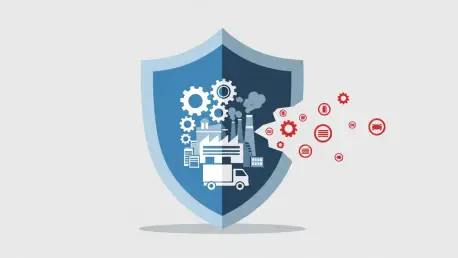
In the event of a workplace health crisis, most business leaders operate under the assumption that their comprehensive insurance portfolio will act as a robust financial backstop. The two primary pillars of this expected protection are Employers’ Liability (EL) and Business Interruption (BI) policies. EL is designed to cover legal costs and compensation if an employee becomes ill or injured due to their work, while BI is intended to replace lost income when operations are halted.
However, the nature of a communicable disease outbreak challenges the fundamental triggers for both types of coverage. Unlike a clear-cut injury from faulty machinery, tracing an illness directly and exclusively to the workplace is a complex and ambiguous task. Similarly, a shutdown ordered by a health authority does not involve the physical property damage that most BI policies require to respond. This disconnect creates a dangerous gap where a business can face mounting liabilities and operational losses with no clear path to an insurance payout.
A Post-Pandemic Wake-Up Call: The Amazon Outbreak as a Case Study
The situation at the Amazon warehouse in Coventry provided a real-world stress test for these insurance principles. The discovery of tuberculosis cases among the workforce prompted immediate action from public health officials, including blood testing for employees and calls to temporarily shut down the site to contain the spread. While the immediate focus was on health and safety, the incident’s ripple effects quickly moved into the operational and financial spheres, forcing a difficult conversation about liability and loss.
This event serves as a critical case study for a post-pandemic world. It highlights how high-density work environments, such as logistics and manufacturing centers, are particularly susceptible to the rapid spread of airborne diseases. More importantly, it demonstrates that even a global corporation can find its standard insurance protections are not automatically activated by such a crisis. The outbreak is a potent wake-up call, forcing companies and insurers alike to re-evaluate risk in an era where biological threats are as tangible as physical ones.
Unpacking the Fine Print: Where Standard Policies Fall Short
Delving into standard insurance contracts reveals why coverage is so elusive. For an Employers’ Liability policy to be triggered, the burden of proof is extraordinarily high. It is not enough for an employee to prove they contracted an illness; they must provide compelling evidence that they caught it at the workplace due to their employer’s negligence. This means demonstrating that the company failed in its duty of care by, for example, ignoring known risks or failing to implement adequate safety measures. This legal hurdle shifts the focus from medical causation to corporate conduct, a far more difficult case to build.
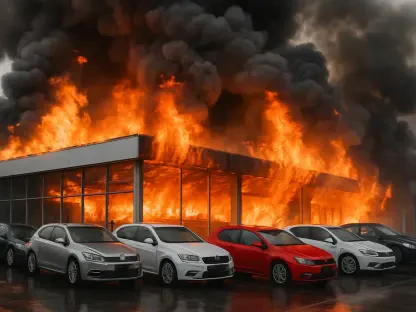
The promise of Business Interruption insurance is equally fragile in the face of disease. Traditionally, these policies respond to financial losses stemming from direct physical damage to property, such as from a fire or flood. An outbreak, no matter how disruptive, does not cause physical harm to a building and therefore fails to trigger the core coverage. Furthermore, in the years since the COVID-19 pandemic, many insurers have explicitly rewritten their policies to include unambiguous exclusions for losses arising from communicable diseases, effectively closing the door on claims related to events like the TB outbreak.
Voices from the Inside: An Expert’s Take on the Evolving Risk Landscape
Insurance experts caution that businesses must understand these nuances to avoid being caught unprepared. According to Matt Pini, managing partner at Consilium Broking UK, the crux of an Employers’ Liability claim is not the illness itself but the employer’s actions. “The claim hinges not on the diagnosis of a disease itself but on the ability to prove employer negligence,” he explains. This distinction is critical because it means an employer who diligently follows all health and safety guidelines may still face a disruptive outbreak but would be in a strong position to defend against a liability claim.
Regarding operational shutdowns, the landscape has fundamentally changed. The widespread BI claims during the pandemic prompted a decisive response from the insurance market. “Since the pandemic, a large number of BI policies now contain specific and unambiguous exclusions for losses arising from infectious or communicable diseases,” Pini confirms. While specialized, non-damage extensions for disease are available, they are not standard, often come with lower payout limits, and must be proactively sought by businesses. This new reality places the onus on companies to know precisely what their policies exclude and to secure specific coverage if they want protection.
Fortifying Your Business: A Practical Guide to Navigating Insurance Gaps
Given these realities, the focus for businesses must shift from relying on reactive insurance payouts to championing proactive risk management. Underwriters are now placing immense scrutiny on the physical conditions of workplaces, especially in high-density sectors. An underwriter’s assessment of a company’s EL risk now heavily weighs factors like ventilation systems, sanitation protocols, and overall environmental safety. A business that can demonstrate robust controls is far more likely to secure favorable terms, while poor conditions can lead to higher premiums or even a refusal to offer coverage.
Ultimately, navigating this complex environment requires a strong partnership between a business and its insurance broker. Company leaders must move beyond assumptions and demand absolute clarity on the scope and limitations of their policies. This involves asking direct questions: Does our BI policy have a communicable disease exclusion? What specific evidence would be needed to prove negligence in an EL claim? By reviewing policies with a critical eye and closing these knowledge gaps before a crisis hits, a business can make informed decisions, invest in the right risk controls, and purchase specialized coverage where necessary.
The experience at the Amazon facility was not just a localized health incident; it was a clear signal of a systemic issue. It underscored that the financial well-being of a company during a health crisis depended less on the insurance policies it held and more on the preventative measures it had implemented and the detailed understanding of the coverage it had painstakingly secured.