
The financial impact of a failed subsea mission extends beyond physical damage, as a lost asset can bring an entire offshore construction project to a complete and costly standstill. This realization has forced a major reassessment within the insurance industry, which previously viewed subsea technology as a secondary concern of the oil and gas sector. As we move deeper into 2026, the landscape of underwater exploration and construction is characterized by a surge in non-energy activities, including seabed mining and carbon capture monitoring. These new ventures bring a unique set of variables that standard marine policies were never designed to accommodate. The complexity of modern underwater operations necessitates a shift from seeing these assets as mere cargo to viewing them as active components of high-stakes infrastructure. Consequently, the focus of risk management is moving toward the operational hazards encountered during the actual mission, ensuring that coverage remains robust in the face of increasingly sophisticated underwater engineering.
The Diversification of Underwater Stakeholders
Expanding Sectors: From Energy to Oceanography
Modern subsea operations have expanded significantly beyond traditional energy markets to encompass marine science, academic research, and utility providers managing offshore cable networks. Today, a wide variety of organizations deploy advanced underwater technology to collect oceanographic data or to monitor offshore wind and tidal energy infrastructure, which has seen unprecedented growth between 2026 and 2028. This diversification means that a much broader range of stakeholders now requires specialized protection for assets that are central to their environmental and commercial missions. As the global push for data-driven ocean management and sustainable power generation intensifies, the demand for sophisticated insurance coverage continues to grow alongside these new industrial applications. These stakeholders are often dealing with tighter margins and higher public accountability than legacy energy firms, making the role of comprehensive risk transfer even more critical for project feasibility and long-term financial stability.
Specialized Hardware: The Risks of High-Value Assets
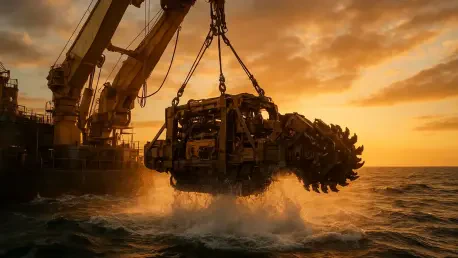
The hardware utilized in these modern missions represents a massive capital investment for operators, often totaling tens of millions of dollars for a single suite of sensors and vehicles. From Remotely Operated Vehicles (ROVs) and Autonomous Underwater Vehicles (AUVs) to specialized subsea trenchers and geotechnical sensors, these tools are indispensable for modern marine work. Each asset carries a unique risk profile determined by its design, its depth rating, and its specific function on the seabed. Because these technologies are so highly specialized, any loss or damage during a mission can result in significant project delays that ripple through the entire supply chain. Insurers must now possess a deep technical understanding of how these machines operate to provide accurate coverage. The focus is no longer just on the replacement value of the metal and circuitry, but on the integrated value the asset provides to a complex, multi-year offshore development project.
Bridging the Gap: Transit Versus Operational Reality
Deployment Vulnerabilities: Moving Beyond Marine Cargo
One of the most persistent challenges in the current subsea market is the gap between traditional marine cargo insurance and the operational needs of modern operators. Standard policies usually prioritize the journey between international ports, but the most significant threats to subsea equipment often begin only after the asset reaches the work site. For many operators, the voyage across the ocean is the safest portion of the asset’s lifecycle; the true financial exposure starts during the mobilization phase and the initial descent into the water column. This transition marks a critical shift from passive transit risk to active operational danger, requiring more nuanced policy wording that addresses the unique pressures of the underwater environment. Underwriters are increasingly moving away from “all-risks” cargo templates toward bespoke solutions that specifically account for the moment the equipment is lowered over the side of the vessel, where the real work begins.
Launch and Recovery: The Critical Interface Phase
The launch and recovery phase is consistently identified as the most dangerous period for subsea assets, regardless of the technological sophistication of the vehicle. During these windows, equipment is highly vulnerable to mechanical failure, crane malfunctions, or accidental collisions with the deployment vessel itself. Rough sea states can cause an AUV or ROV to swing uncontrollably during the air-to-water transition, while powerful thrusters and heavy tethers present constant hazards during the mobilization process. These incidents frequently lead to immediate, irreparable damage before a mission even starts, illustrating why risk managers must look beyond the static value of the gear. Modern risk assessments now incorporate detailed analysis of the deployment vessel’s handling systems and the specific sea-state limitations of the launch procedure. By understanding the physical mechanics of this interface, insurers can better price the risks associated with getting these sensitive tools into the water.
Navigating Risks in Hostile Environments
Operational Hazards: Currents and Seabed Obstructions
Once subsea equipment is submerged, it enters a hostile environment where direct human intervention is nearly impossible and visibility is often severely restricted. Hazards such as unpredictable underwater currents, entanglement in discarded fishing gear, and unexpected seabed obstructions pose constant threats to tethered ROVs and untethered AUVs alike. Mechanical failures or a sudden loss of communication with a unit can lead to expensive recovery missions that far outweigh the initial costs of transporting the equipment to the site. These unpredictable environmental factors mean that the physical characteristics of the seafloor must be a primary consideration in any risk assessment strategy. In regions like the North Sea or the Gulf of Mexico, where the seabed is cluttered with existing infrastructure, the risk of entanglement or collision is particularly high. This requires operators to utilize sophisticated sonar and mapping tools to mitigate dangers that could lead to a total loss of the asset and mission failure.
Modern Underwriting: The Lifecycle Solution
To address these evolving challenges, the insurance industry successfully adopted a lifecycle perspective that integrated coverage from international transit to final recovery. This shift proved essential in high-growth markets like the Asia-Pacific, where investment in offshore wind and subsea infrastructure reached new heights between 2026 and 2028. Underwriters prioritized specific deployment methodologies and localized environmental data over generic equipment valuations. This transition ensured that policies provided genuine protection against the actual threats of deep-sea operations. Stakeholders who implemented advanced real-time monitoring and rigorous pilot certification standards effectively lowered their premiums and reduced downtime. By documenting these operational successes, companies established a new benchmark for subsea safety and financial reliability. This proactive approach moved the industry beyond simple loss coverage toward a model of risk prevention. It provided the roadmap for securing the next generation of technology in extreme environments.