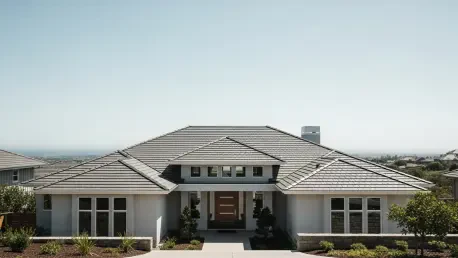

The dramatic landscape of South Carolina’s coastline is increasingly defined not by its scenic vistas but by the escalating financial burden of property insurance that threatens to displace long-term residents. In areas like Horry County and Myrtle Beach, homeowners are facing a volatile market where premiums have surged far beyond the state average of ten percent, often reaching increases of thirty-five percent over just the last two years. This sharp upward trajectory is primarily fueled by a convergence of environmental risks and global economic shifts, leaving property owners in a state of perpetual financial uncertainty. As hurricane seasons become more unpredictable and construction costs remain elevated due to inflation in labor and materials, the standard model for coastal living is being fundamentally challenged. The crisis has reached a tipping point where the cost of protection now competes with the mortgage itself, forcing a difficult conversation about the sustainability of development in these highly vulnerable regions and the economic future of the shore.
Legislative Hurdles and the Stalling of Market Reform
The Collapse of the Insurance Rate Reduction Act
Legislative efforts to curb these rising costs met a significant roadblock when House Bill 4817, widely known as the Insurance Rate Reduction and Policyholder Protection Act, failed to advance through the Senate. Although the bill initially gained strong momentum and passed the House with a substantial majority, its progress halted within the Senate Banking and Insurance Committee as the legislative session reached its conclusion. Under the current two-year cycle of the South Carolina General Assembly, the expiration of this session effectively renders the bill dead, ensuring that no comprehensive state-level reforms will be implemented until at least 2027. This delay leaves coastal residents in a precarious position, as they must continue to navigate a hardening insurance market without the structural protections that the bill promised. The failure to pass this legislation underscores the complexity of balancing insurer profitability with consumer affordability in a state that remains high-risk.
The proposed legislation was designed to be a multi-faceted approach to stabilizing the market by addressing both the supply of insurance and the costs associated with claims. One of its primary objectives was to empower the Department of Insurance with enhanced authority to recruit new carriers into the state, thereby increasing competition and theoretically lowering premiums through market pressure. Additionally, the act aimed to implement stricter regulations on roofing contractors whose predatory practices have historically inflated claim costs, contributing to the overall rise in premiums for all policyholders. By doubling the available tax credits for hurricane-resistant home improvements, the bill sought to provide a direct financial incentive for residents to harden their properties against wind damage. Without these measures, the burden of proof for mitigation and the financial weight of rising rates remain squarely on the shoulders of homeowners who face another year of exposure to the market.
Structural Drivers of Premium Inflation
The underlying causes of the insurance crisis extend far beyond the state’s borders, rooted in the intricate mechanics of the global reinsurance industry that sets the baseline for local policy pricing. Reinsurers, the entities that provide insurance to the insurance companies themselves, have significantly hiked their rates for the Southeastern United States due to the perceived increase in climate-related risks. These global firms view the South Carolina coast as a high-liability zone, and the costs of their coverage are directly passed down to local consumers in the form of higher annual premiums. This phenomenon is exacerbated by the rising costs of construction materials and specialized labor, which ensure that even minor repairs now require a much larger payout than in previous decades. When a hurricane or severe storm hits, the total cost of rebuilding is significantly higher today than it was even a few years ago, forcing insurers to maintain larger capital reserves.
In the absence of the Insurance Rate Reduction Act, the Department of Insurance continues to operate within a framework that offers limited tools for immediate market correction or rate suppression. While state officials can monitor rate filings for excessive increases, they have little power to force companies to stay in the market or to lower prices when the underlying risk factors remain so high. The current environment has led to a “flight to quality,” where insurance carriers are becoming extremely selective about the properties they cover, often excluding older homes or those without modern mitigation features. This leaves many residents in Georgetown and Horry counties with fewer options, often forcing them into the surplus lines market or the state-backed wind pool, where coverage is typically more expensive and provides fewer benefits. The lack of a legislative mandate to foster competition means that the market remains consolidated among a few major players who hold power.
Immediate Relief Strategies and External Advocacy
Leveraging Mitigation Grants and Federal Support
While the state legislature remains in a period of transition, homeowners are being encouraged to take advantage of existing programs like the SC Safe Home Mitigation Grant Program for relief. This initiative provides a vital lifeline by offering up to $7,500 in matching grants to help residents strengthen their primary residences against high winds and coastal storms. These funds are specifically designated for improvements such as roof replacements that meet the rigorous “IBHS FORTIFIED” safety standards, which are designed to significantly reduce the likelihood of structural failure during a hurricane. By investing in these physical upgrades, homeowners can do more than just protect their physical safety; they can also trigger mandatory premium discounts of up to twenty-five percent. This proactive approach allows individuals to exert some control over their financial situation, bypassing the legislative gridlock to achieve immediate savings while enhancing resilience.
Recognizing that local solutions may not be enough to counter global market forces, South Carolina’s leaders have increasingly turned their attention toward Washington, D.C. for a broader solution. The General Assembly has passed formal resolutions urging Congress to intervene in the national property insurance crisis, advocating for federal backstops or reinsurance programs that could stabilize the market across the entire country. These leaders argue that because the reinsurance market is global, a state-by-state approach is inherently limited in its effectiveness. Federal involvement could potentially provide the capital necessary to lower the cost of catastrophic coverage, which would then trickle down to individual homeowners in coastal regions. Until such federal reforms materialize or the state legislature reconvenes in 2027 to reconsider domestic policy changes, the primary defense for South Carolinians remains personal property mitigation and the utilization of current tax incentives.
Balancing Costs and Consumer Protections
One of the more contentious elements of recent policy discussions involved a proposal to eliminate the state’s mandatory zero-deductible windshield replacement benefit for auto insurance policies. Proponents of this change argued that the high volume of glass claims, which are often driven by aggressive third-party marketing, has contributed to an overall increase in both auto and property insurance costs. By introducing a deductible for glass repair, lawmakers hoped to reduce the total claim volume and lower premiums across the board for all types of coverage. However, the proposal faced stiff opposition from consumer advocacy groups who viewed the removal of this perk as a significant reduction in protection for low-income drivers. This debate illustrates the difficult trade-offs that policymakers must navigate when attempting to lower costs without stripping away valuable benefits. Every proposed cut or regulatory shift intended to lower premiums often results in a loss of coverage.
Property owners were advised to prioritize immediate physical mitigation over the hope of rapid legislative relief as the political process remained stalled through the current legislative cycle. Since the General Assembly did not pass the necessary reforms before the session ended, the most effective path forward involved securing the SC Safe Home grants to achieve “FORTIFIED” status. This specific certification became the gold standard for insurers, providing a clear metric for risk reduction that translated into verifiable premium discounts. Homeowners who documented their upgrades and worked closely with specialized contractors found themselves in a stronger position to negotiate with carriers or seek alternative coverage in a tight market. Moving forward, the focus shifted toward building a more resilient coastal infrastructure through local building codes and community-based insurance pools. By taking these individual steps, residents successfully mitigated some of the financial impacts while waiting for solutions.