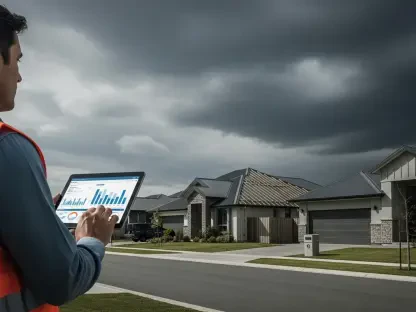

Homeownership has long been the cornerstone of the American dream, yet for millions of families today, the soaring cost of protecting that dream has become a nightmare that threatens their daily survival and financial stability. As the price of homeowners insurance climbs to unprecedented heights, a staggering 57 percent of policyholders report making significant sacrifices just to maintain their coverage. This is no longer a marginal budgetary adjustment but a systemic shift where insurance premiums act as a primary driver of financial anxiety for a majority of the population. The traditional view of insurance as a predictable, fixed expense has vanished, replaced by a volatile market that forces difficult choices between maintaining a roof over one’s head and putting food on the table. This crisis is reshaping the middle-class lifestyle, demanding a complete reevaluation of how Americans allocate their resources to protect their most valuable assets in an increasingly unpredictable economy.
Structural Realities: The Widening Gap Between Premiums and Inflation
Economic Forces: The Surge in Policy Pricing
Since the start of this decade, the cost of residential insurance has skyrocketed at a rate that far outpaces the general cost of living, creating a massive vacuum in the average household budget. While the broad inflation index has seen a notable 16 percent increase over the last few years, homeowners insurance premiums have surged by an eye-watering 46 percent during the same period. This massive disconnect suggests that the factors driving insurance prices are independent of standard consumer price pressures, reflecting a deep-seated instability in the risk management sector. For many, this means that even if they managed to navigate the general rise in grocery and fuel prices, the sudden spike in their annual insurance bill is the tipping point that pushes their finances into the red. This disparity has fundamentally altered the economic landscape for homeowners, turning a once-routine bill into a major financial hurdle that requires constant monitoring and adjustment as prices continue to rise.
Much of this upward trajectory is fueled by the lingering effects of global supply chain disruptions that radically increased the price of construction materials and specialized labor. Following the era of pandemic-driven shortages, the cost to completely rebuild a home has remained stubbornly high, with current data suggesting that properties now require at least 40 percent more coverage to reach full replacement value compared to earlier standards. Insurers have been forced to adjust their underwriting models to account for these heightened liabilities, passing the burden of these increased replacement costs directly onto the consumer. Consequently, a policy that was sufficient just a few years ago now leaves a homeowner dangerously underinsured unless they pay significantly higher premiums for additional coverage. This creates a cycle where the very act of maintaining adequate protection becomes a financial burden that limits the homeowner’s ability to save for other needs or invest in their property.
Environmental Impact: Rising Risks and Disaster Costs
Beyond the rising costs of lumber and labor, the insurance industry is grappling with an era of unprecedented environmental volatility that has forced a radical reassessment of regional risk. In the previous year alone, the United States recorded 23 weather-related disasters that each exceeded one billion dollars in damages, ranging from devastating wildfires in the West to severe storm surges along the Gulf Coast. These catastrophic events are no longer seen as once-in-a-century anomalies but as recurring threats that necessitate higher capital reserves for insurance providers. To remain solvent, companies have restricted their appetite for risk, often withdrawing from entire markets or implementing double-digit rate hikes in high-hazard areas. This contraction of the market leaves homeowners with fewer choices and higher prices, as the remaining insurers must account for the increased probability of massive payouts. The result is a landscape where geography dictates affordability more than ever before.
The localized impact of these environmental shifts is particularly evident in coastal and wildfire-prone states where traditional insurance models are struggling to keep pace with changing weather patterns. In regions like Florida or California, the addition of mandatory flood or wind coverage can double or even triple the annual cost of ownership, often catching residents by surprise when their policies come up for renewal. As these climate-driven costs become more integrated into standard actuarial tables, the financial profile of a home changes from a stable asset to a high-risk liability. This shift forces a broader conversation about urban planning and the long-term viability of certain residential developments in the face of persistent environmental threats. For the individual homeowner, the reality of living in a beautiful but vulnerable location now carries a heavy premium that can erode the equity they have spent years building through mortgage payments and home improvements.
Personal Sacrifices: The Human Cost of Insurance Affordability
Budgetary Shifts: Choosing Between Coverage and Essentials
The sheer magnitude of these premium increases has forced a significant portion of the population to make harrowing decisions regarding their basic standard of living and health. Recent studies indicate that nearly half of all homeowners have already curtailed nonessential spending, such as dining out or travel, but the cuts are increasingly moving into much more dangerous territory. Approximately 16 percent of policyholders have admitted to deferring necessary medical care or prescriptions to ensure their insurance premiums are paid on time. Even more alarming is the revelation that one in ten homeowners has resorted to skipping meals to cover the cost of their policy, highlighting a desperate trade-off between physical health and financial security. These statistics paint a grim picture of the modern American household, where the safety net intended to protect against disaster has itself become a source of immediate hardship and personal sacrifice for many families.
Beyond the immediate physical toll, the financial strain of maintaining insurance has driven many homeowners into a cycle of debt and long-term economic instability. Roughly 20 percent of those surveyed have resorted to borrowing money, whether through credit cards, personal loans, or family assistance, specifically to keep their homes insured against potential loss. This reliance on debt only compounds the problem, as interest payments further drain the household budget and reduce the ability to respond to future financial shocks. The psychological weight of this burden is substantial, as the fear of losing one’s home to a disaster competes with the daily reality of a dwindling bank account and mounting interest. As insurance costs continue their upward march, the prevalence of these extreme measures suggests that a large segment of the population is living on the edge of a financial precipice, where a single missed payment could lead to a total loss of coverage and financial ruin.
Strategic Solutions: Proactive Management and Long-Term Mitigation
In response to this challenging environment, financial experts emphasize the need for a more proactive and investigative approach to managing insurance costs throughout the year. One of the most effective strategies involves shopping for new quotes at least every six months to ensure that the current policy remains competitive in a rapidly shifting marketplace. However, homeowners must exercise caution during this process, as it is vital to compare identical coverage limits and deductibles to avoid being lured by lower prices that offer insufficient protection. Additionally, many insurers offer unadvertised discounts for policy bundling, the installation of smart home security systems, or even membership in certain professional organizations and alumni groups. By actively seeking out these hidden savings, policyholders can often find modest relief from the relentless upward pressure on rates, though this requires a level of diligence that many consumers have not previously applied.
Long-term affordability also depends on physical risk mitigation, which can lead to structural improvements that both protect the property and reduce the perceived liability for the insurer. Investing in fortified roofing materials, hurricane shutters, or wildfire-resistant landscaping can serve as a powerful signal to insurance companies that a property is less likely to result in a total loss claim. While these upgrades require an upfront investment, many jurisdictions and insurance providers now offer credits or premium reductions for homes that meet specific resilience standards. On a broader scale, integrating insurance considerations into the initial homebuying process is becoming a critical step for financial success. Prospective buyers are now encouraged to research insurance rates for a specific zip code as early as they check property taxes or local school ratings. This foresight ensures that the total cost of ownership is fully understood before a legal contract is signed.
Financial planners recommended that insurance became a central pillar of early budgetary forecasting to avoid the sticker shock that often accompanied modern real estate closings. Many successful homeowners prioritized risk mitigation by retrofitting older structures with modern, disaster-resistant materials that lowered their annual premiums significantly over time. It was found that those who maintained a disciplined schedule of policy reviews and compared multiple carriers every six months were better positioned to weather the volatility of the market. The industry moved toward incentivizing resilience, where data-driven assessments of property safety determined the accessibility of affordable coverage. Ultimately, the crisis encouraged a shift in consumer behavior where the long-term costs of environmental risk were treated with the same weight as mortgage interest rates. This period of high premiums demonstrated that protecting a home required as much strategic planning as the initial purchase of the property itself.