
The persistent escalation of geopolitical instability along the Bab el-Mandeb Strait has fundamentally transformed the commercial landscape for global maritime trade during the current operational year of 2026. As vessel operators navigate these increasingly treacherous waters, the cost of securing war risk insurance has reached unprecedented levels, forcing a massive restructuring of logistics budgets for international carriers. Insurers are no longer viewing the southern Red Sea as a localized conflict zone but rather as the epicenter of a broader regional crisis that threatens the viability of the Suez Canal route. This shift has resulted in premiums that now constitute a significant portion of a voyage’s total operating cost, often rivaling the price of fuel for older, less efficient tankers. Major maritime underwriters have adjusted their risk models to account for sophisticated drone technology, effectively pushing the boundaries of what was once considered a safe distance. This financial ripple effect is felt in every major port as the industry adjusts to a new normal of high-stakes navigation.
Strategic Shifts in Maritime Insurance and Risk Zones
Redefining the High-Risk Zone: Maritime Perimeter Adjustments
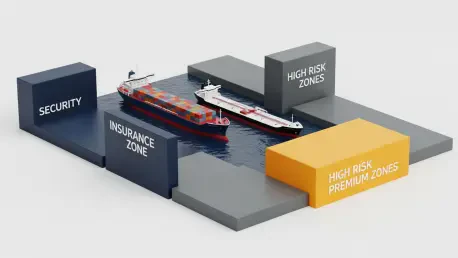
The Joint War Committee has recently undertaken a significant re-evaluation of the designated high-risk zones, extending the previous boundaries to encompass a much larger section of the Gulf of Aden and the western Indian Ocean. This geographical expansion is a direct response to the increased range of anti-ship weaponry used by regional actors, which can now strike targets far beyond the immediate vicinity of the Yemeni coast. Consequently, vessels that previously felt secure traversing the outer edges of the Arabian Sea are now finding themselves within the administrative reach of war risk surcharges. These new designations are not merely bureaucratic shifts; they trigger immediate contractual obligations for shipowners to notify their insurers before entering these waters. Failure to comply with these stringent reporting requirements can lead to a total loss of coverage, leaving billion-dollar assets and their valuable cargoes exposed to unmitigated financial ruin. The perimeter expansion has essentially redefined the map of safe commercial transit.
Beyond the immediate financial cost, the expansion of these zones has introduced a complex layer of operational friction into the global supply chain that was previously absent. Captains must now manage a dynamic set of safety protocols that vary almost by the mile, requiring constant communication with private security contractors and naval task forces stationed in the region. The sheer size of the new high-risk area means that even vessels bound for ports far away from the conflict, such as those in East Africa or the southern Persian Gulf, are being caught in the net of high insurance rates. Underwriters are utilizing real-time satellite data and artificial intelligence to monitor traffic density and threat levels, resulting in premium adjustments that can fluctuate within hours of a ship’s arrival at the Bab el-Mandeb. This volatility has made it nearly impossible for logistics companies to provide fixed-rate quotes to their customers, leading to a broader instability that affects every market from industrial raw materials to consumer electronics.
Economic Resilience: Strategies for Managing Escalating Costs
In response to these surging insurance costs, the shipping industry has begun implementing aggressive cost-mitigation strategies that prioritize long-term resilience over immediate transit speed. Many of the world’s largest container lines have institutionalized the Cape of Good Hope diversion as a standard operating procedure for the duration of 2026, despite the additional two weeks of travel time. This shift represents a fundamental change in the “just-in-time” delivery philosophy that has dominated the industry for decades, as the certainty of a safe passage now outweighs the speed of a Red Sea transit. For those vessels that must still use the Suez Canal, insurance syndicates are increasingly demanding the presence of armed security teams and the installation of electronic jamming equipment as a condition for coverage. These mandates further inflate the price of transit but are seen as necessary investments to protect against kinetic interference. The accumulation of these expenses is eventually passed down to consumers.
The maritime sector ultimately adopted a more integrated approach to risk management by fostering closer cooperation between private insurers and governmental maritime security agencies. This collaborative framework allowed for a more nuanced understanding of the threat landscape, leading to the development of “safe corridors” where premiums were slightly moderated in exchange for strict adherence to convoy protocols. Industry leaders shifted their focus toward building more robust supply chains that relied less on single-point bottlenecks, encouraging the expansion of land-bridge alternatives and regional manufacturing hubs. While the immediate crisis in the Red Sea necessitated reactive measures, the long-term strategy centered on diversifying transit routes to ensure that global trade remained insulated from localized geopolitical shocks. By investing in these diversified logistical networks, the industry successfully mitigated the most severe economic impacts of the 2026 surge in maritime risk. These proactive steps provided a blueprint for future stability in an unpredictable world.