
The idyllic vision of owning a sprawling ranch or a secluded mountain retreat in the heart of Wyoming is increasingly being overshadowed by a harsh economic reality that threatens the very foundation of rural homeownership. What was once considered a localized concern for those living deep within the timberline has transformed into a widespread financial crisis affecting properties near major landmarks like the Glendo Reservoir and residential hubs near Cheyenne. This shift is not merely a byproduct of changing weather patterns but is the result of a fundamental tightening of underwriting standards by national insurance carriers who are re-evaluating the safety of the American West. As premiums skyrocket and coverage options dwindle, the real estate landscape in the Cowboy State is facing a pivotal moment where the cost of protection may soon outweigh the value of the land itself. The intersection of geographic remoteness, limited fire department accessibility, and a volatile global insurance market has created a perfect storm for property owners.
The Geography of Risk and Coverage
Proximity Factors: The Five-Mile Buffer Rule
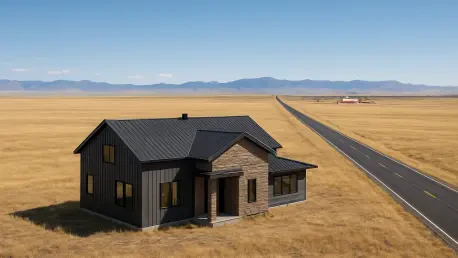
A critical metric currently dictating insurance eligibility and pricing across Wyoming is the implementation of the five-mile buffer, a strict radius measured from the nearest active fire station. Most national insurance carriers now utilize high-resolution satellite mapping to determine a property’s exact distance from emergency services, leaving little room for negotiation or nuance. For homes situated even a fraction of a mile outside this perimeter, the consequences are financially staggering and often prohibitive. A prime example of this rigid enforcement is found on the north end of the Glendo Reservoir, where a recently constructed custom home, built with modern fire-resistant materials and situated on open prairie, faced annual insurance quotes as high as $40,000. Because the structure sat 5.5 miles from the nearest station, it was classified as a maximum-risk asset, regardless of the fact that it was far from any timberline or traditional forest fire fuel sources.
The financial burden imposed by this proximity rule is reshaping the desirability of rural land, as prospective buyers realize that a beautiful view may come with a mortgage-sized insurance bill. This distance-based underwriting does not always account for the quality of the roads or the specific topography between the fire station and the home, creating a binary system of “insurable” or “uninsurable” based on a map coordinate. For many residents who have lived in these areas for decades, the sudden imposition of these strict boundaries feels like an arbitrary penalty for choosing a rural lifestyle. As companies continue to refine their risk models, the five-mile radius is becoming a definitive line in the sand that separates viable real estate from high-liability investments. The lack of flexibility in these modern underwriting algorithms means that even the most well-maintained properties can be sidelined by a few hundred yards of distance from a volunteer department.
Fire Safety Ratings: Beyond Physical Distance
Even homeowners who find themselves comfortably within the designated five-mile safety buffer are not immune to the aggressive rate hikes sweeping the state. Insurance companies are no longer satisfied with simple mileage metrics; they are now conducting deep-dive evaluations of regional fire ratings, which encompass the actual capabilities of local volunteer departments. These assessments scrutinize everything from the age of the fire-fighting equipment and the training hours of the crew to the reliability of local water supplies and the density of flammable vegetation in the surrounding area. Senator Taft Love, a prominent figure in the Wyoming construction and legislative sectors, recently noted that his own aviation property, located within four miles of a fire department, saw its premiums triple in a single year. This suggests that the industry is aggressively re-rating entire zip codes based on the perceived failure of local infrastructure to handle large-scale events.
This shift toward more granular risk assessment reflects a growing lack of confidence in rural infrastructure to mitigate modern wildfire behavior. When a regional fire rating drops, every property owner in that jurisdiction pays the price, regardless of their individual mitigation efforts or home construction quality. This systemic increase in costs is particularly difficult for those on fixed incomes or those operating small-scale agricultural businesses. The volatility of these ratings means that a property could be considered a safe bet one year and a high-risk liability the next, often without any change to the property itself. As insurance providers lean more heavily on data-driven modeling, the traditional reliance on local fire departments is being challenged by the sheer scale of potential disaster payouts. Consequently, the dialogue between state officials and insurance providers has shifted toward how to improve these ratings through significant infrastructure investment and better resource management.
Architectural Vulnerabilities and Market Shifts
The Log Cabin Liability: Aesthetic Versus Protection
The log cabin remains the quintessential symbol of the Wyoming mountain lifestyle, yet it has become a unique and growing liability in the current insurance climate. In scenic regions such as Dubois and Union Pass, premiums for these structures have surged by 200% to 300% over the last decade, reflecting a fundamental shift in how insurers view combustible construction materials. Unlike standard frame houses where a fire might be contained to a single room or wing, log homes represent a high probability of total loss. Because individual logs are structural and cannot be easily replaced like drywall or standard siding, even a moderate fire often necessitates a complete demolition and rebuild. Insurance producers at firms like Tegeler & Associates have observed that national carriers are increasingly hesitant to even offer quotes for log structures, regardless of their location or the presence of advanced sprinkler systems.
The financial reality of insuring these properties has reached a breaking point for many secondary homeowners who view their cabins as a legacy or a retreat. In one notable instance, a log home valued at approximately $900,000 was hit with an annual premium exceeding $10,000, a cost that rivals the property taxes and maintenance combined. This architectural penalty is forcing a change in the regional building trends, as more developers and individual owners opt for steel, stone, or fire-treated composite materials to ensure their homes remain bankable and insurable. The “mountain aesthetic” is being weighed against long-term financial viability, and for many, the cost of the traditional look is becoming too high to justify. As insurers continue to lose money on total-loss claims involving timber-heavy structures, the gap between the cost to insure a log cabin and a modern fire-resistant home will likely continue to widen, further devaluing older rustic properties.
The Self-Insurance Trend: High-Stakes Financial Gambles
As the cost of traditional coverage exceeds the reach of many residents, a dangerous trend of “going bare” or self-insuring has begun to emerge among property owners in high-risk zones. Faced with premiums that consume a significant portion of their annual income, some owners of high-value secondary homes are making the calculated, yet high-stakes decision to forgo insurance entirely. While this eliminates the immediate burden of monthly or annual payments, it leaves the individual entirely responsible for the total loss of their asset in the event of a disaster. This trend is not limited to the wealthy; it also affects long-time residents who have paid off their mortgages and are no longer required by a lender to maintain active coverage. The long-term implications of this shift are profound, as a single catastrophic fire could lead to the complete erasure of personal wealth for hundreds of families and a sharp decline in the local tax base.
The move toward self-insurance also creates a ripple effect throughout the broader Wyoming economy, as it reduces the pool of funds available for reconstruction after a fire. When a community is hit by a disaster, the influx of insurance payouts typically serves as the primary engine for economic recovery and rebuilding. Without these funds, fire-damaged properties may sit abandoned for years, dragging down the value of neighboring homes and discouraging new investment in the area. Local officials are increasingly concerned that a major wildfire in a “self-insured” region would result in a permanent loss of population and economic activity. This shift reflects a growing sense of desperation among property owners who feel abandoned by a market that no longer values their business. The transition from a collective risk-sharing model to individual liability represents a significant regression in the financial security of rural Wyoming, signaling a need for intervention.
National Economic Influences on Local Rates
The National Insurance Pool: Cross-Regional Subsidies
It is a common misconception that Wyoming’s insurance rates are determined solely by local conditions; in reality, the state’s property owners are part of a vast national insurance pool that is currently under immense pressure. Significant natural disasters in other parts of the country, such as catastrophic wildfires in California, devastating hurricanes along the Gulf Coast, and persistent flooding in the Midwest, have forced national carriers to raise rates across the board. Because these companies operate on a global or national scale, they must maintain capital reserves that can cover massive payouts in any region. Consequently, a homeowner in a relatively quiet Wyoming valley may find themselves subsidizing the astronomical recovery costs of a hurricane in Florida or a brush fire in the Hollywood Hills. This interconnectedness means that even if Wyoming experiences a year with zero fire activity, premiums may still rise to offset losses incurred elsewhere.
National regulators, working through the National Association of Insurance Commissioners (NAIC), have identified a growing sustainability crisis in the insurance market that transcends state lines. The frequency and severity of billion-dollar weather events have increased significantly, leading many insurers to reconsider their participation in high-risk western states altogether. This “de-risking” strategy often involves pulling out of entire markets or setting such high premiums that they effectively exit the market without officially doing so. For Wyoming, this means fewer choices and less competition, which naturally drives prices upward regardless of the actual local risk profile. The state’s relatively small population gives it less leverage in negotiations with these massive corporations, leaving residents at the mercy of macro-economic shifts and global climate trends. This nationalization of risk has made it difficult for local officials to provide direct relief, as the drivers of the crisis are often outside their jurisdiction.
Reconstruction Costs: The Inflationary Impact
Beyond the immediate threat of fire, the skyrocketing cost of reconstruction has played a vital role in the escalation of property insurance premiums across the state. The specialized labor and construction materials required to build in Wyoming’s rugged terrain have become significantly more expensive, particularly following the period of high global inflation. When an insurance company calculates a premium, they are not looking at the market value of the home, but rather the cost to rebuild it from the ground up according to current building codes. Because the prices of lumber, steel, and skilled masonry have risen sharply, the “replacement value” of a home is often much higher than it was even five years ago. This mandatory upward adjustment in coverage limits naturally leads to higher premiums for the consumer, as the insurer is now on the hook for a much larger potential payout in the event of a total loss.
This inflationary pressure is particularly acute in remote areas where transportation costs for materials add a significant premium to any project. In regions like Teton County or the areas surrounding the Bighorn Mountains, the shortage of local contractors means that labor must be brought in from long distances, further driving up the estimated cost of recovery. Insurers must account for these logistical challenges when setting their rates, leading to a situation where the cost of insurance is disconnected from the local economy’s ability to pay. Furthermore, many older homes in Wyoming do not meet modern fire-safety codes, meaning that any rebuilding effort would require expensive upgrades that the insurance company must cover. This gap between the historical value of a home and the modern cost of replacement has created a significant “coverage gap,” where many residents find themselves underinsured despite paying higher premiums than ever before.
State Initiatives and Future Mitigation
Legislative Solutions: Investing in Forest Health
Recognizing that the insurance crisis poses a direct threat to the state’s economic stability and the livelihoods of its residents, Wyoming lawmakers have prioritized pre-disaster mitigation as a primary tool for market stabilization. During a recent legislative session, the passage of House Bill 78 established a $3 million forest health grant program specifically designed to address the root causes of wildfire spread. The goal of this initiative is to reduce “fuel loads”—the accumulation of dead wood, overgrown brush, and invasive species—that act as accelerants for fast-moving fires. By targeting high-risk areas near residential developments, the state aims to create “defensible space” on a macro scale. Proponents of the bill, including county commissioners and state senators, argue that the state must be proactive in managing its grasslands and forests to give insurance companies a tangible reason to lower their risk assessments.
The success of these programs depends on the coordination between state, federal, and private landowners, as fire does not respect property boundaries. By creating strategic fire breaks and implementing controlled burns, Wyoming is attempting to change the physical landscape in a way that aligns with the safety requirements of national insurers. This proactive stance is intended to demonstrate to the insurance industry that Wyoming is committed to reducing the probability and severity of future fire events. There is a growing consensus among policymakers that if the state can provide data-driven evidence of successful mitigation, it will have a stronger hand in negotiating for more favorable rates and better coverage options for its citizens. While $3 million is seen as an initial investment, it represents a fundamental shift in strategy from reactive emergency spending to long-term preventative maintenance, which is essential for the future of the state’s real estate market.
Forward-Looking Strategies: Stabilization and Data
The path toward stabilizing Wyoming’s property insurance market required a multi-faceted approach that blended aggressive land management with sophisticated data analysis. State officials worked closely with the National Association of Insurance Commissioners to ensure that Wyoming’s unique geographic and architectural landscape was accurately represented in national risk models. By providing insurance carriers with detailed information regarding the state’s mitigation efforts and infrastructure improvements, leaders sought to decouple local premiums from unrelated national disasters. This effort was aimed at moving away from the “one size fits all” approach that had unfairly penalized rural homeowners who had taken extensive steps to protect their properties. The long-term goal focused on creating a transparent system where homeowners could receive direct premium credits for fire-resistant landscaping and structural upgrades.
In the final assessment, the state successfully established a framework that balanced the necessity of rural development with the realities of environmental risk. The ongoing dialogue between state regulators and the insurance industry led to the development of more nuanced underwriting tools that recognized the value of Wyoming’s specific mitigation programs. While the cost of living in remote beauty remained higher than in urban centers, the explosive growth of premiums began to level off as the benefits of forest health initiatives became evident. Residents were encouraged to view property maintenance as a shared responsibility that directly influenced the financial viability of their communities. By prioritizing infrastructure and data-driven management, the state took the necessary steps to ensure that the dream of Wyoming homeownership remained an attainable reality for future generations. This proactive stance provided a model for other Western states facing similar challenges in an era of increasing environmental uncertainty.