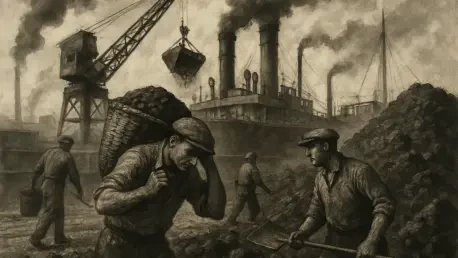

In the global effort to economically isolate Russia following its invasion of Ukraine, Western sanctions have been a primary weapon. The United Kingdom has positioned itself as a leader in this financial charge, vowing to cripple Moscow’s war machine. However, a startling joint investigation by the Center for Research on Energy and Clean Air (CREA) and energy news outlet Montel suggests a significant gap in this economic armor. The report accuses British insurers of enabling the vast majority of Russia’s seaborne coal trade, effectively undermining the UK’s own sanctions. This article delves into the specifics of this alleged loophole, exploring its mechanics, the scale of its impact, and the heated debate it has ignited between policymakers and the powerful London insurance market.
The Sanctions Framework: Intent vs. Reality
To grasp the significance of the current situation, it is crucial to understand the context of the initial sanctions. In mid-2022, both the UK and the European Union moved to ban the direct import of Russian coal, aiming to cut off a vital revenue stream for the Kremlin. This measure was part of a broader strategy to exert maximum economic pressure and limit Russia’s ability to fund its military operations. The ban was considered a major step, targeting a key component of Russia’s energy exports. However, the efficacy of such measures depends not only on prohibiting direct trade but also on restricting the vast network of financial and logistical services—like insurance—that underpins global commerce. It is within this complex ecosystem of ancillary services that the current controversy has emerged.
A Deep Dive into the Coal Insurance Controversy
The Dominant Role of British Insurers
The investigation’s findings paint a stark picture of the UK’s oversized role in Russia’s coal trade. According to the report, UK-based Protection and Indemnity (P&I) clubs provided coverage for a staggering 60% of Russia’s seaborne coal exports in 2025, an increase from 52% in 2021. This insurance facilitated the shipment of over 100 million tonnes of Russian coal, valued at an estimated €15.1 billion (£13.01 billion). The analysis pinpoints two major providers: the London P&I Club, which covered 37% of these exports, and the West of England Shipowners, which insured 36%. These figures reveal that rather than being marginalized, the UK’s world-leading insurance industry has become even more central to Russia’s ability to sell its coal on the global market.
An Inconsistent Approach to Energy Sanctions
The core of the issue lies in a legal distinction that critics label a loophole. While UK law bans the import of Russian coal, it does not prohibit British firms from providing insurance and other services for coal shipments destined for third-party countries. This policy stands in sharp contrast to the UK’s regulations for other Russian energy products. For instance, tankers carrying Russian oil can only access UK insurance if the cargo’s price adheres to the G7 price-cap mechanism. Furthermore, the government has already announced a future ban on providing insurance services for Russian liquefied natural gas (LNG) shipments. This inconsistency allows Russian coal to flow freely to new markets, with nearly 40% of the UK-insured volume reportedly heading to China, thereby helping Russia pivot its trade away from the West.
A Clash of Perspectives: Legal Compliance vs. Moral Imperative
The revelations have triggered a sharp divide between activists and the insurance industry. Campaigners from CREA argued that while the UK government claims to be crippling Russia’s war effort, it is simultaneously permitting “its world-leading insurance companies to facilitate the overwhelming majority of Russia’s coal exports.” This sentiment was echoed by Labour MP Alex Sobel, who called the findings “deeply alarming” and pledged to push for a comprehensive insurance ban on all shipping used to transport Russian hydrocarbons. In response, the implicated firms have defended their actions by pointing to their adherence to the law. A representative for the West of England P&I Club stated that as long as the transport of Russian coal to countries outside the EU remains lawful, coverage will continue, provided members comply with all sanctions. The London P&I Club added that its coverage is offered on a general, worldwide basis and is not specific to any single country or cargo.
The Future of UK Sanctions and Global Energy Flows
The investigation has significantly raised the political stakes, creating pressure on the UK government to address this apparent contradiction in its foreign policy. The emerging trend points toward a potential tightening of regulations to close the loophole, bringing the rules for coal in line with those for oil and LNG. The public call by a sitting MP for a “comprehensive insurance ban” suggests that legislative action may be on the horizon. Such a change would have a profound impact, potentially disrupting a significant portion of Russia’s export capacity and forcing Moscow to seek more expensive and less reliable insurance alternatives. For the UK’s insurance market, it would mean navigating a more complex regulatory landscape and potentially sacrificing business to align with geopolitical objectives.
Key Takeaways and Strategic Considerations
The analysis yields several critical takeaways. First, a significant legal loophole allows the UK’s insurance industry to play a pivotal role in Russia’s global coal trade, directly contradicting the spirit of Western sanctions. Second, this situation highlights a major inconsistency in UK policy, which applies stricter rules to Russian oil and LNG than to coal. For policymakers, the clear recommendation is to review and harmonize sanctions across all Russian fossil fuels to ensure their effectiveness. For businesses in the maritime insurance and logistics sectors, the strategic imperative is to anticipate potential regulatory changes and evaluate the reputational risks associated with facilitating trade that, while legal, runs counter to the UK’s stated foreign policy goals.
The Enduring Challenge of Watertight Sanctions
This episode served as a powerful reminder that the effectiveness of economic sanctions is determined by their comprehensiveness and the political will to enforce them. The investigation into the UK’s role in insuring Russian coal exposed how legal nuances can create significant gaps that undermine broader geopolitical strategies. As Russia continues to adapt its trade patterns in response to Western pressure, the challenge for the UK and its allies will be to create policies that are not only legally robust but also agile enough to close loopholes as they appear. Ultimately, the controversy forced a crucial debate about where the line between lawful commerce and tacit support for an aggressor state truly lies.