
The enduring friction between the United States and the Iranian government has long served as a geopolitical barometer for the Middle East, yet the current escalation has fundamentally rewritten the rules of engagement for global underwriters and logistics providers alike. What was once viewed primarily through the narrow lens of direct physical damage—such as isolated hull strikes or property destruction—has evolved into a complex web of systemic financial and operational risks. This transformation reflects a broader shift in the global insurance landscape, moving beyond the immediate theater of war to disrupt the very foundations of international commerce.
As the conflict intensifies, the primary threat to stability is no longer just the kinetic destruction of assets but the strategic immobilization of trade. Insurers, brokers, and multinational corporations are currently adapting to a reality where regional volatility acts as a permanent tax on global supply chains. By examining the transition from physical loss to accumulation risk, it becomes clear that the insurance industry is undergoing a structural realignment. This article explores how this friction is reshaping risk assessment, forcing a move toward more sophisticated, data-driven frameworks that can account for the invisible costs of geopolitical tension.
Historical Precedents: The Evolution of Modern War Risk
To understand the current state of insurance in the Middle East, the analysis must consider the historical precedents of maritime and aviation coverage in high-risk zones. Traditionally, war risk insurance was a specialized niche designed to protect against the sinking and burning of assets during active hostilities. However, recurring tensions in the Strait of Hormuz and the Persian Gulf have forced a foundational shift in how risk is quantified and priced. Past incidents, such as the Tanker War of the 1980s, established the original framework for geographic exclusions and additional premiums that still influence current policies.
Today, these historical concepts are being tested by modern logistical interdependencies that did not exist in previous decades. The current landscape is no longer shaped solely by the threat of missiles or sea mines, but by the strategic immobilization of trade routes that anchor the global economy. This evolution suggests that the industry has moved away from insuring against specific events toward insuring against the total breakdown of logistical connectivity. Consequently, the reliance on historical data is being replaced by real-time threat assessments, as the nature of conflict becomes increasingly centered on economic disruption rather than just territorial gain.
The Shift Toward “Second Wave” Insurance Exposure
Financial Pressure: Immobilized Assets and Accumulation Risk
While the initial headlines of any conflict focus on kinetic strikes, the insurance industry is currently grappling with second wave exposure. This phase is defined by the logistical nightmare of assets becoming stuck in transit rather than being physically destroyed. For underwriters, the primary concern has shifted to accumulation risk—the concentration of massive insured value within a single, high-risk geographic area. When hundreds of vessels and aircraft are forced to a standstill in the Persian Gulf, the potential for a single event to trigger a multi-billion-dollar claim event increases exponentially.
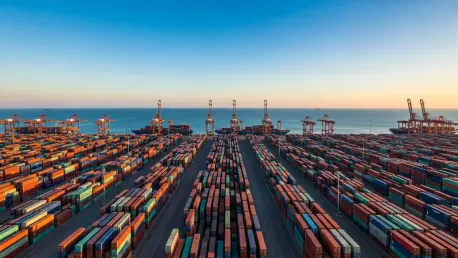
This concentration of value forces a move away from simple indemnity toward complex assessments of how prolonged delays impact the solvency of global trade networks. As thousands of containers sit idle, the financial pressure builds not just on the cargo owners, but on the insurers who must manage the aggregation of risk across multiple lines. The industry is finding that the most significant losses often stem from the inability to move assets out of harm’s way before a crisis peaks. This realization is driving a fundamental change in how exposure is mapped, with a new emphasis on the duration of stagnation rather than the probability of an explosion.
Maritime Crisis: The Threat of Constructive Total Loss
The shipping sector serves as the most visible indicator of this widening conflict, as major carriers have been forced to suspend bookings for sensitive cargo in Gulf markets. A critical legal and financial threshold in this sector is the 12-month deprivation period. If a vessel remains trapped or stranded due to the conflict for a full year, it may be declared a Constructive Total Loss (CTL). This requires insurers to pay out the full value of a ship that remains physically intact but is legally and operationally unreachable.
With billions of dollars in asset value currently concentrated in the Persian Gulf, the threat of CTL claims looms large over the marine insurance market. Industry leaders have observed that the suspension of bookings between the Indian subcontinent and Gulf hubs has already created a massive bottleneck. This situation creates a peak exposure scenario where the legal status of an asset becomes more relevant than its physical condition. As insurers prepare for the possibility of paying for phantom losses—vessels that exist but cannot work—the premiums for transiting these waters continue to reach historic highs.
Regional Differences: Cargo Vulnerabilities and Aviation Hub Aggregation
Beyond the hulls of ships, the cargo and aviation sectors face unique hurdles that traditional policies often struggle to address effectively. For cargo owners, the coverage gap regarding delays is a significant vulnerability, as most standard war risk policies do not cover economic losses stemming from spoiled goods or missed contracts. This leaves businesses exposed to the indirect costs of the US-Iran friction, which can often exceed the value of the physical goods themselves.
Simultaneously, aviation underwriters are managing hub accumulation at major airports like Dubai and Doha. As airspace closures force long-distance rerouting and groundings, the concentration of high-value aircraft in vulnerable locations requires intense scrutiny of airline routing and relocation strategies. These regional differences highlight a move toward more granular, data-driven underwriting methodologies. Instead of broad regional assessments, insurers now require specific information on flight paths and airport security to maintain coverage, reflecting a more cautious and technical approach to Middle Eastern risk.
Technological and Regulatory Shifts: Shaping the Future of Risk
Looking ahead, the US-Iran conflict is acting as a catalyst for permanent changes in the insurance industry’s approach to volatility. There is an increased reliance on real-time satellite tracking and AI-driven predictive modeling to monitor asset accumulation in real-time. These tools allow underwriters to visualize exposure as it shifts across the map, providing a dynamic view of risk that was previously impossible. Economically, the industry is moving toward parametric triggers for disruption insurance, where payouts are based on the duration of a port closure rather than physical damage.
Regulatory bodies are also expected to demand higher capital reserves for companies with significant exposure to Middle Eastern trade. This shift suggests a future where the insurance market is more proactive and technologically integrated, yet more cautious in its risk appetite. The integration of geopolitical intelligence into underwriting software is becoming standard practice, ensuring that premiums reflect the immediate political climate. As technology continues to bridge the gap between world events and financial impact, the ability to anticipate disruption will become the primary competitive advantage for global insurers.
Strategic Takeaways: Resilience in Global Commerce
The findings of this analysis suggest that businesses and insurers must move beyond a reactive stance to survive this period of instability. Key strategies include:
- Policy Audits: Shippers and cargo owners should review their wordings to ensure protection against sustained disruption rather than just physical peril, closing the gap between operational reality and financial coverage.
- Diversification of Routes: Reducing reliance on critical chokepoints like the Strait of Hormuz is essential for long-term supply chain resilience. Utilizing alternative land and sea corridors can mitigate the impact of sudden regional closures.
- Active Accumulation Management: Underwriters must use advanced analytics to ensure their exposure in a single hub does not exceed their risk tolerance. Real-time monitoring of asset concentration is no longer optional.
By applying these best practices, professionals can better navigate the legal and logistical complexities of a world where systemic failure is as great a threat as physical destruction. Resilience now depends on the ability to decouple business operations from specific geographic vulnerabilities.
The New Baseline: Lessons from a Shifting Landscape
The conflict between the United States and Iran fundamentally altered the risk balance between underwriters and the global trade community. It demonstrated that the most enduring financial impacts often stemmed from the cumulative weight of delays, the legal status of stranded assets, and the breakdown of regional hubs. As the theater of commerce became inseparable from the theater of war, the insurance industry was forced to adapt its frameworks to manage an era of permanent disruption. This period proved that the traditional focus on physical damage was insufficient to protect the modern economy against sophisticated geopolitical maneuvers.
To maintain stability moving forward, industry participants prioritized the integration of predictive analytics and parametric insurance models. These innovations provided the necessary tools to quantify the previously invisible risks of logistical stagnation. The lessons learned from this conflict served as a blueprint for managing other regional tensions across the globe. Ultimately, the transition to a more agile and technologically centered insurance market offered a path toward greater economic resilience. Organizations that embraced these strategic shifts found themselves better positioned to withstand the unpredictable nature of modern international relations.