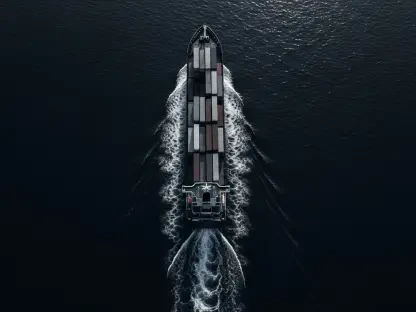
Imagine a massive cargo vessel stranded mid-ocean, not due to a storm or mechanical failure, but because a cyberattack has crippled its navigation systems. Such scenarios are no longer the stuff of fiction but a stark reality facing the marine insurance industry today. As global trade continues to underpin economic stability, the sector finds itself at a critical juncture, grappling with risks that are as diverse as they are complex. From decarbonization pressures to the rise of offshore renewable projects, marine insurance must navigate uncharted waters to protect the arteries of international commerce. This report dives into how the industry is evolving to address these emerging threats while seizing opportunities for innovation and growth.
Navigating the Shifting Tides: The Current State of Marine Insurance
The marine insurance industry serves as a linchpin for global trade, safeguarding the movement of goods and vessels that fuel economies worldwide. With shipping responsible for over 80% of international trade by volume, the role of marine insurance in mitigating financial losses from accidents, damage, or disruptions cannot be overstated. It encompasses a broad spectrum of coverage, from hull and machinery protection to cargo insurance and liability through Protection and Indemnity (P&I) clubs. These segments collectively ensure that the risks of operating in a volatile environment are managed, providing a safety net for shipowners, operators, and infrastructure stakeholders.
Beyond its protective function, the industry holds significant economic weight, contributing billions in premiums annually while supporting countless jobs in shipping and related sectors. Major insurers and brokers dominate the market, leveraging technology to refine underwriting precision and streamline claims processes. Digital tools now allow for more accurate risk assessments, transforming how policies are crafted and disputes resolved. However, this technological shift also brings challenges, as rapid advancements demand constant adaptation from market players.
Moreover, the regulatory landscape, shaped by frameworks from bodies like the International Maritime Organization (IMO), adds another layer of complexity. Standards such as safety and environmental compliance dictate operational norms, influencing how insurers evaluate risks and set premiums. As the industry balances these pressures with the need for innovation, it stands poised to address both traditional perils and modern threats, setting the stage for a deeper exploration of the risks reshaping its future.
Emerging Threats and Opportunities in Marine Risk Management
Unpacking New Risk Profile: Trends Reshaping the Industry
The marine insurance sector is undergoing a profound transformation as new risks emerge from environmental mandates and technological vulnerabilities. Decarbonization, driven by global net-zero goals, is at the forefront, compelling vessel owners to adopt alternative fuels and technologies that introduce untested risks. Simultaneously, cyber threats loom large, with digitized navigation and port systems becoming prime targets for attacks that can halt operations in an instant. Add to this the rapid growth of offshore renewable energy projects, and the industry faces a risk profile far removed from traditional maritime hazards.
Emerging technologies offer a glimmer of hope amid these challenges. Innovations like smart glasses for real-time incident assessment are being tested to enhance surveyors’ ability to respond swiftly to crises, potentially revolutionizing risk management. Yet, these tools are still in early stages, grappling with practical limitations in harsh marine environments. Meanwhile, stakeholder dynamics are shifting—vessel owners prioritize compliance with stringent regulations, while insurers and brokers are leaning into technical expertise to address complex liability scenarios and tailor solutions.
Beyond these shifts, market drivers such as regulatory changes are creating openings for brokers to expand their roles. No longer just intermediaries, they are increasingly positioned as strategic consultants, guiding clients through decarbonization challenges and cyber preparedness. This trend signals a broader opportunity for the industry to redefine itself, turning regulatory and technological pressures into pathways for growth and differentiation.
Market Insights: Growth, Data, and Future Projections
Current data paints a dynamic picture of the marine insurance market, with premium growth reflecting both opportunity and strain. Claims costs, particularly for P&I clubs, have risen due to intricate liability issues, while sector performance indicators highlight a steady demand for coverage amid global trade expansion. Looking at trends from this year onward, projections to 2027 suggest a compound annual growth rate driven by escalating cyber risks and the burgeoning offshore renewables sector, which demands specialized policies.
A forward-looking lens reveals how decarbonization will continue to shape market dynamics. As shipping adopts greener practices, insurers must recalibrate risk models to account for uncharted variables like alternative fuel safety. Technology adoption, from AI-driven analytics to digital claims platforms, is expected to further accelerate, offering efficiencies but also necessitating heavy investment. These shifts point to a market that, while under pressure, holds significant potential for those who can adapt swiftly.
The interplay of these factors suggests a future where marine insurance must balance caution with boldness. Growth in cyber coverage for maritime assets and advisory services tied to regulatory compliance are likely to emerge as key revenue streams. Insurers and brokers who anticipate these needs will not only mitigate risks but also carve out competitive advantages in an increasingly intricate landscape.
Confronting the Storm: Challenges Facing Marine Insurance
The marine insurance industry faces a daunting array of challenges as risks grow more interconnected across cyber, environmental, and operational spheres. A single cyber breach can cascade into operational downtime and environmental mishaps, creating a web of liability that defies simple solutions. This complexity tests the limits of traditional risk models, pushing insurers to rethink how they assess and price exposure in a world where threats rarely exist in isolation.
Technological hurdles compound these difficulties, as innovations like smart glasses struggle to perform reliably in challenging settings such as engine rooms. Integration of such tools requires overcoming not just technical barriers but also cultural resistance within a historically cautious sector. Regulatory burdens add further strain, with mandates like the IMO’s Carbon Intensity Indicator (CII) and Energy Efficiency Existing Ship Index (EEXI) imposing strict compliance requirements on vessel owners, which in turn ripple through to insurance practices.
Market-driven issues, from escalating claims expenses for P&I clubs to supply chain disruptions in offshore projects, highlight the urgency for solutions. Collaboration among stakeholders stands out as a promising path forward, enabling shared expertise to tackle multifaceted risks. Leveraging technology for enhanced risk assessment, such as predictive analytics, also offers a way to stay ahead of emerging threats, provided the industry can bridge the gap between innovation and practical application.
Steering Through Compliance: The Regulatory Landscape of Marine Insurance
The regulatory framework governing marine insurance is a intricate tapestry, heavily influenced by international standards set by organizations like the IMO. These guidelines ensure safety, environmental protection, and operational integrity, directly shaping how insurers underwrite policies and evaluate risks. Recent discussions at the Maritime Environment Protection Committee (MEPC 83) on net-zero strategies underscore the growing emphasis on sustainability, pushing the industry to align with ambitious global targets.
Compliance plays a pivotal role in underwriting practices, as vessel owners must meet stringent standards that affect their insurability. This dynamic elevates the importance of cyber security measures, given the vulnerabilities in navigation and operational systems that regulations now demand be addressed. Insurers must factor these requirements into their risk evaluations, often requiring detailed audits of clients’ digital defenses to prevent catastrophic breaches.
Regulatory pressures, while burdensome, also spur strategic adaptation. Brokers, in particular, find themselves in a critical position to guide clients through this maze, using their understanding of evolving laws to offer tailored advice. As rules tighten and compliance becomes a competitive edge, the industry must pivot toward proactive strategies, ensuring that adherence to standards does not merely mitigate penalties but also builds long-term resilience.
Charting the Future: Where Marine Insurance Is Headed
Peering into the horizon, the future of marine insurance appears both challenging and ripe with potential, driven by cutting-edge technologies like AI-powered risk modeling. These tools promise to refine how risks are predicted and managed, offering a level of precision that could transform underwriting. Digital platforms are also set to streamline interactions between insurers, brokers, and clients, fostering efficiency in a sector often bogged down by paperwork.
Market disruptors loom large, with rapid decarbonization and the expansion of renewable energy projects poised to redefine risk landscapes. Vessel owners are increasingly seeking resilience-focused solutions over traditional recovery models, signaling a shift in consumer preferences that insurers must heed. Growth areas such as cyber insurance for maritime assets and advisory services for navigating regulatory shifts present untapped opportunities for forward-thinking players.
Influencing factors like global economic conditions and innovation cycles will further mold the industry’s trajectory. International regulations, evolving at a brisk pace, will continue to challenge established practices, demanding agility from all stakeholders. As marine insurance charts this course, the ability to anticipate and adapt to these currents will distinguish leaders from laggards in a rapidly changing arena.
Anchoring the Insights: Prospects and Pathways for Marine Insurance
Looking back on the discussions, the marine insurance industry confronted a whirlwind of change, adapting to risks like decarbonization, cyber threats, and offshore renewables with a blend of caution and innovation. The journey revealed an industry capable of balancing stability with the need for agility, as stakeholders navigated regulatory complexities and technological frontiers. Key findings pointed to the transformative power of collaboration and digital tools in addressing interconnected challenges.
Moving forward, actionable steps emerged as critical for sustained progress. Stakeholders should prioritize investment in technology-driven risk solutions, ensuring that tools like AI and real-time assessment platforms are refined for practical use. Fostering deeper partnerships among insurers, brokers, and vessel owners can unlock shared expertise, turning obstacles into stepping stones. Exploring growth avenues, such as strategic advisory roles for brokers, offers a chance to redefine value in this space.
Ultimately, the path ahead for marine insurance hinged on embracing innovation without losing sight of its foundational strengths. By viewing challenges as catalysts for reinvention, the industry positioned itself to not only weather the storm but to chart a bold new course, capitalizing on emerging opportunities to safeguard global trade for the long haul.