
Despite the rapid advancement of office automation and robotic assistance in factories, musculoskeletal disorders remain a silent epidemic that drains billions of dollars from the American economy every year while compromising the long-term health of millions of workers. These conditions, which include chronic back pain, carpal tunnel syndrome, and various repetitive stress injuries, are notoriously difficult to manage because they often develop over long periods through subtle, repetitive motions. For many years, the primary challenge for safety professionals has been the reactive nature of workplace interventions; typically, a problem is only addressed after an employee reports significant pain or files a medical claim. This delay creates a systemic vulnerability where hazardous movements are allowed to persist until they result in physical debilitation. By the time a traditional ergonomic assessment is conducted, the damage to the worker’s body is often already done, and the financial impact on the organization through medical expenses and lost work time has already begun to accrue.
Modern workplaces are finding that the complexity of identifying these “invisible” risks requires a shift toward more sophisticated, data-driven observation. Traditional methods often relied on manual checklists and occasional visits from consultants, which provided only a snapshot in time and frequently missed the nuanced behaviors that lead to injury. As the pace of work accelerates in sectors like logistics and high-tech manufacturing, the window for intervention narrows, necessitating a more continuous and integrated approach to monitoring physical strain. The current landscape demands a strategy that moves beyond simple compliance toward a comprehensive understanding of human biomechanics in real-time. Without a way to visualize the cumulative stress on a worker’s body, organizations are essentially guessing which tasks pose the greatest threat, leading to inefficient resource allocation and a persistent cycle of preventable injuries that undermine both corporate stability and individual well-being.
Shifting Toward Proactive Risk Management
The insurance industry is currently spearheading a transformative shift from a model of reactive risk transfer to one of active, preventative risk management. Traditionally, an insurance provider was seen merely as a financial cushion that absorbed the costs of an accident after it happened, but today’s leading firms are repositioning themselves as strategic partners in health and safety. This consultative approach focuses on identifying high-risk behaviors and environmental hazards before they manifest as costly workers’ compensation claims. By working closely with policyholders to implement advanced diagnostic technologies, insurers can help companies maintain operational continuity and avoid the massive disruptions that follow a major workplace injury. This evolution reflects a growing realization that preventing an injury is far more cost-effective than managing its aftermath, creating a symbiotic relationship where both the insurer and the business benefit from a healthier, more consistent workforce.
This new proactive paradigm is especially critical given the cascading effects that injuries have on business operations beyond the direct medical costs. When a skilled employee is sidelined by a musculoskeletal disorder, the organization faces significant indirect burdens, including the administrative complexity of managing insurance paperwork, the loss of specialized knowledge, and the logistical strain of training a replacement. These hidden costs often exceed the direct medical expenses, creating a heavy drag on productivity and profitability. Furthermore, a high rate of injury can severely damage a company’s reputation and internal culture, leading to lower employee engagement and higher turnover rates. By shifting the focus to early detection and hazard mitigation, safety leaders are not just preventing physical harm; they are protecting the fundamental resilience of the business. This approach allows organizations to treat safety as a continuous operational priority rather than a periodic box-checking exercise.
The Role of AI and Computer Vision in Diagnostics
The most impactful technological breakthrough in the field of ergonomics is the integration of Artificial Intelligence and high-precision computer vision. In the past, conducting a thorough ergonomic analysis required the physical presence of a specialist who would manually observe a worker and take measurements, a process that was difficult to scale and prone to human error. Today, sophisticated AI algorithms can analyze brief video clips of employees performing their regular duties to detect postural deviations and excessive force that the naked eye might miss. By applying principles of physics and biomechanics to standard video feeds, these tools provide an objective, data-driven assessment of risk that can be conducted remotely. This capability allows safety professionals to evaluate thousands of tasks across multiple global locations simultaneously, ensuring that no high-risk activity remains hidden simply because of its distance from a central office or a lack of specialized on-site staff.
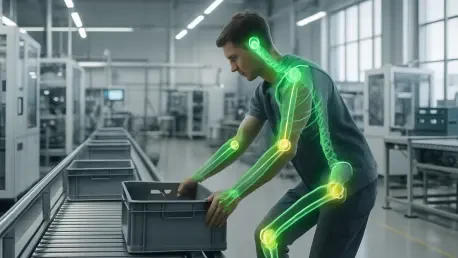
Once the video data is processed, the AI generates a visual representation of the findings, often superimposing a color-coded digital “avatar” over the footage of the actual worker. This visualization translates complex biomechanical data into an easily understandable format where specific joints and muscle groups are highlighted in red, yellow, or green based on the level of strain they are experiencing. For example, a manager can instantly see if a worker’s lower back is being overstressed during a repetitive lifting task, making the need for a solution undeniable. While the AI provides the diagnostic “where” and “what,” professional ergonomists remain essential for determining the “how” of the solution. These human experts use the AI’s data to design specific interventions, such as modifying the height of a workstation or introducing specialized tools to reduce physical exertion. This synergy between machine precision and human intuition ensures that interventions are both targeted and effective.
Democratizing Safety through Accessible Models
Historically, the high cost of hiring professional ergonomic consultants meant that only the largest corporations could afford comprehensive safety programs, leaving small and medium-sized businesses to manage risks as best they could. This dynamic is changing rapidly as the industry moves toward tiered service models that leverage digital platforms to democratize access to high-end safety resources. Many providers now offer self-service mobile applications that allow supervisors on the shop floor to record video of a task and upload it for immediate virtual analysis. This removes the logistical and financial barriers associated with on-site visits, making it possible for even a small workshop to receive the same caliber of diagnostic insight as a global manufacturing giant. By lowering the entry price for professional-grade ergonomics, technology is ensuring that every worker, regardless of the size of their employer, can benefit from a safer and more ergonomically sound environment.
The tiered approach also allows organizations to allocate their safety budgets more intelligently by matching the level of professional intervention to the complexity of the risk. For routine office tasks or simple manual movements, a virtual check-up powered by AI may be sufficient to identify and correct postural issues. However, for more complex industrial environments or tasks involving heavy machinery, the system can flag the need for a more intensive on-site evaluation by a senior ergonomist. This flexibility ensures that specialized human expertise is reserved for the most challenging and dangerous scenarios, maximizing the impact of limited safety resources. By creating a scalable ladder of support, from automated digital analysis to expert-led consultations, the industry is creating a safety net that is both broad enough to cover everyone and deep enough to address the most severe hazards found in the modern workplace.
Improving Efficiency through Ergonomic Upgrades
There is a growing body of evidence demonstrating that ergonomic improvements are not merely a cost center but are actually powerful drivers of operational efficiency. A classic example can be seen in manufacturing facilities where computer vision diagnostics identified specific manual lifting tasks as the primary cause of repetitive strain injuries. By implementing mechanical lift systems or automated conveyors to handle these high-risk movements, companies have seen a dramatic reduction in physical strain on their workforce. However, the benefits did not stop at safety; the introduction of mechanical assistance often speeds up the production process and significantly reduces the error rate associated with physical fatigue. When a task is made easier for the human body to perform, it is almost invariably completed with greater precision and speed, leading to a direct improvement in the facility’s overall output and profitability.
The intersection of safety and productivity provides a compelling business case for investing in the latest ergonomic technologies. When employees are not distracted by discomfort or exhausted by unnecessary physical exertion, they can focus more effectively on the quality of their work. This leads to a virtuous cycle where reduced injury rates lead to lower insurance premiums and workers’ compensation costs, while increased efficiency leads to higher revenue. Viewing ergonomic interventions as fundamental operational upgrades allows business leaders to align their safety goals with their financial objectives. In this context, a safer workplace is not just a moral or legal requirement; it is a competitive advantage that enables a company to produce more with a more engaged and resilient workforce. The return on investment for these technologies is realized through both the prevention of loss and the active generation of value across the entire production chain.
Sustaining Change through Behavioral Economics
While engineering solutions like adjustable desks and mechanical lifts are the most effective way to eliminate hazards, many job functions still rely heavily on human behavior and technique. The challenge with behavioral interventions, such as teaching proper lifting posture or encouraging regular movement breaks, is the tendency for workers to revert to old, harmful habits over time, especially during busy periods. To combat this “habit regression,” companies are increasingly applying the principles of behavioral economics to their safety programs. This involves creating a workplace environment where the safe choice is also the easiest or most rewarding choice. By using subtle nudges, such as placing visual cues at eye level or integrating ergonomic reminders into digital workflows, organizations can help employees maintain safe behaviors without constant, heavy-handed supervision.
Sustaining a safe culture requires more than just initial training; it requires a continuous feedback loop of measurement and reinforcement. Advanced AI tools contribute to this by providing ongoing data that shows whether behavioral changes are sticking or if certain teams are starting to drift back into high-risk patterns. This allows managers to provide targeted coaching and positive reinforcement where it is most needed, rather than subjecting everyone to repetitive, generalized safety meetings. When combined with incentive programs that reward teams for maintaining low-risk scores, these behavioral strategies create a culture where safety becomes an instinctive part of the daily routine. Long-term success in reducing musculoskeletal risks depends on this holistic approach, where cutting-edge technology identifies the problems, and behavioral science ensures that the solutions become a permanent part of the organizational DNA.
Integrating Advanced Systems for Future Resilience
Organizations that successfully navigated the implementation of these technologies provided a clear roadmap for others to follow. They prioritized the integration of AI-driven computer vision as their primary diagnostic layer, which allowed for the rapid identification of ergonomic hotspots across their entire operational footprint. By moving away from reactive assessments and adopting a continuous monitoring posture, these companies effectively eliminated the lag time between hazard emergence and mitigation. The most successful leaders also ensured that their technology initiatives were backed by professional ergonomists who could translate raw data into actionable engineering and procedural changes. This balanced approach not only reduced the frequency of musculoskeletal disorders by significant margins but also fostered a more transparent and supportive relationship between management and the frontline workforce.
Building on these foundations, businesses recognized that the true value of ergonomic technology was found in its ability to support a more agile and responsive workforce. They established clear protocols for using mobile diagnostic apps, allowing for immediate feedback during the onboarding of new employees or the redesign of production lines. Moving forward, the most effective strategy involved treating workplace safety as a core component of digital transformation rather than an isolated health initiative. By embedding ergonomic health data into their broader operational analytics, companies ensured that human well-being remained a central metric in their pursuit of efficiency. These proactive measures created a resilient organizational structure that was better equipped to handle the physical demands of a high-speed economy while simultaneously protecting the long-term health and productivity of its most essential asset.