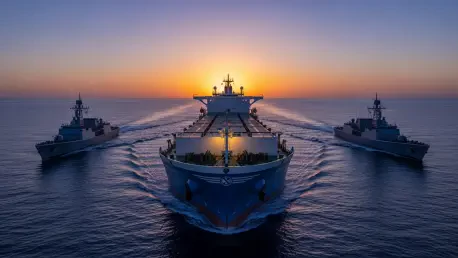

When the bulk carrier Minoan Pioneer was struck by a high-velocity projectile that tore through its engine room, the resulting inferno did more than just cripple a single vessel; it ignited a global economic firestorm that has sent ripples through every major financial hub. The maritime shipping industry, once a predictable engine of global trade, is now navigating an era of unprecedented volatility where the traditional rules of engagement and risk management have been discarded. As smoke rose from the drifting bulk carrier in the narrow pinch-points of the Persian Gulf, the global market received a stark reminder that the arteries of the world’s energy supply are more fragile than they have appeared in decades. This sudden spike in kinetic hostilities has transformed the Strait of Hormuz from a manageable security challenge into a financial and logistical nightmare for shipowners and insurers alike.
The current maritime crisis is no longer an isolated regional dispute but a systemic breakdown of the safety protocols that have governed international waters for a generation. While diplomatic efforts continue in quiet rooms across the globe, the reality for the men and women on the water is one of immediate, life-threatening danger that financial instruments are struggling to quantify. We are witnessing a convergence of geopolitical tensions and tactical aggression that has forced a complete re-evaluation of the costs associated with transporting the world’s most vital resources. As the “two-chokepoint” threat expands across the Middle East, the global economy is bracing for a prolonged period of high freight rates and structural instability that may redefine maritime commerce for years to come.
A 48-Hour Surge: Intensifying Maritime Hostilities
The Strait of Hormuz has long been recognized as the world’s most sensitive energy artery, but a recent and violent 48-hour window has shattered any remaining hope for a peaceful de-escalation in the region. The strike on the Minoan Pioneer, which occurred approximately 20 nautical miles northeast of Al Khasab, represents a frightening shift toward direct, high-impact targeting of commercial assets. The projectile did not just cause surface damage; it effectively neutralized the ship’s ability to defend itself or maneuver, leaving the crew in a desperate struggle against a blaze that quickly consumed the accommodation areas. With one crew member still missing, the human cost of these attacks has become a focal point for industry bodies that are now demanding more than just verbal assurances of safety.
This devastating incident was the climax of a series of aggressive maneuvers that saw multiple tankers narrowly avoiding catastrophe in the same narrow waterway. On the day preceding the Minoan Pioneer attack, the Very Large Crude Carrier Egypt Prosperity and the tanker On Pride were both subjected to warning shots and near-miss explosions that served as a chilling prelude to the kinetic strike that followed. These clustered events suggest a coordinated effort to harass and deter international shipping, signaling that the current threat level has reached its most critical point in recent memory. For the global shipping industry, these 48 hours have served as a definitive proof that the risk of total vessel loss is no longer a theoretical concern but a looming reality for every transit.
As news of the fire and the missing sailor reached the offices of the United Kingdom Maritime Trade Operations, the psychological impact on the shipping community was immediate and profound. Ship captains who once viewed the Strait of Hormuz as a routine part of their route are now reporting a palpable sense of anxiety as they enter these contested waters. The physical damage to the Minoan Pioneer, combined with the lack of clarity regarding the source of the projectile, has created an environment of pervasive uncertainty. This lack of attribution is particularly troubling for naval commanders in the region, as it complicates the deployment of defensive assets and leaves commercial vessels largely vulnerable to asymmetrical threats that can strike without warning.
The Strategic Importance: Strait and Red Sea Chokepoints
The geographic nature of the current maritime crisis has evolved into what experts are now calling a “two-chokepoint” threat, effectively trapping global trade between the Strait of Hormuz and the Red Sea. For decades, the Red Sea served as a reliable safety valve for vessels wishing to avoid tensions in the Persian Gulf, but that alternative has effectively collapsed under the weight of simultaneous hostilities. Houthi forces near the Bab el-Mandeb strait have implemented aggressive blockades, meaning that a vessel avoiding the fire in Hormuz simply sails into a different theater of conflict in the Red Sea. This pincer movement on global energy supplies has created a logistical bottleneck that threatens to starve international markets of the crude oil and refined products they require to function.
Statistical data from the region paints a bleak picture of the impact these dual threats have had on the volume of daily vessel crossings. Historically, the Strait of Hormuz saw well over 100 ships pass through its narrowest points every single day, maintaining a steady flow of nearly 20% of the world’s oil consumption. In the wake of the latest attacks, those numbers have plummeted to as few as eight to eleven vessels per day, a drop so significant that it represents a functional halting of one of the world’s busiest trade routes. This collapse in traffic is not merely a sign of caution but a reflection of the fact that the industry has run out of safe alternatives, as the Red Sea route has also seen its crude loadings bound for Asia hit their lowest points of the conflict.
The convergence of these threats near the Bab el-Mandeb and the Strait of Hormuz has created a systemic risk that transcends the capabilities of any single naval power to manage. While international task forces attempt to patrol these vast and dangerous stretches of water, the sheer volume of high-risk territory makes comprehensive protection almost impossible. This has led to a situation where the global energy supply chain is being stretched to its absolute breaking point, as shipping capacity is rerouted or simply idled in safe harbors. The economic implications are vast, as the delay in energy shipments begins to affect everything from industrial manufacturing in Europe to fuel prices at the pump in North America, demonstrating the profound interconnectedness of these distant waterways.
Analyzing Economic Volatility: The Rise of War-Risk Premiums
In the world of marine insurance, the reaction to the 48-hour surge in hostilities was as swift as it was severe, with war-risk premiums undergoing an unprecedented price correction. Before the current escalation, the cost of insuring a vessel for a single voyage through the Gulf was a manageable 0.25% of the hull value, a figure that most shipowners considered a routine cost of doing business. However, by the midpoint of 2026, the market has seen these rates skyrocket to a staggering 10% for high-value tankers. For a modern ship valued at $100 million, this shift turns a $250,000 insurance bill into a $10 million expense for a transit that lasts only a few days, fundamentally altering the profit margins of every cargo on the water.
This extreme volatility is driven by the fact that the marine insurance market operates on a highly reactive, voyage-by-voyage basis rather than on long-term fixed contracts. Every time a projectile strikes a ship like the Minoan Pioneer, underwriters must reassess the probability of a total loss, and their pricing models reflect that increased risk in real-time. Even during brief periods of relative calm, such as the minor diplomatic opening seen earlier in the summer, the rates only dipped slightly before surging back toward the 10% ceiling at the first sign of new aggression. This “yo-yo” effect in pricing makes it nearly impossible for logistics companies to provide stable quotes to their clients, leading to a cascading series of surcharges and price hikes throughout the global supply chain.
Furthermore, the market for risk capacity is becoming increasingly thin as some underwriters choose to withdraw from the region entirely rather than face the possibility of a catastrophic claim. While some insurance remains available for those willing to pay the astronomical prices, the sheer cost of coverage has become a deterrent that is effectively doing the work of a physical blockade. When insurance premiums reach a double-digit percentage of a vessel’s total value, the economic viability of the voyage disappears for many smaller operators. This leaves only the largest, state-backed, or most desperate entities to brave the passage, further reducing the diversity of the fleet and making the global energy market more susceptible to localized disruptions and price manipulation.
Expert Perspectives: Diplomatic Stagnation and Security Risks
Industry veterans and geopolitical analysts point to a dangerous disconnect between high-level diplomatic rhetoric and the grim reality facing mariners on the water. Neil Roberts of the Lloyd’s Market Association has noted that the current premium hikes are a direct and logical reflection of the fundamental laws of supply and demand for risk capacity. While diplomats in Washington and Qatar may speak of progress in negotiations, the insurance market responds only to kinetic events and physical evidence of danger. As long as projectiles continue to fly and crew members remain at risk, the financial sector will continue to treat these waterways as active war zones, regardless of any temporary “technical disputes” regarding the policing of the strait.
The failure of government-backed mitigation efforts has further highlighted the depth of the current crisis and the skepticism of the private sector. For example, a massive $40 billion maritime reinsurance scheme led by the U.S. Development Finance Corporation was designed to stabilize the market by providing a backstop for private insurers. Yet, reports indicate that this scheme has written zero business, as shipowners have largely ignored the financial incentive in favor of physical security. The consensus among groups like Intertanko is that financial protection is irrelevant if the waterway is perceived as fundamentally unsafe for human life. Owners are increasingly prioritizing the safety of their crews over the preservation of their capital, a shift that suggests a deepening lack of confidence in the international security architecture.
Moreover, the focus of Tehran and other regional actors on technical policing disputes rather than comprehensive ceasefires has left the shipping industry in a state of perpetual limbo. These disputes over the legal management of the straits create a “gray zone” of maritime law where vessels can be detained or harassed under the guise of regulatory enforcement. This ambiguity is often more frightening to underwriters than open warfare because it is harder to predict and almost impossible to defend against through traditional naval escort. The result is a stagnant diplomatic environment where no party feels secure enough to lower their guard, and the shipping industry is left to bear the financial and physical consequences of this geopolitical stalemate.
Navigating Danger: Strategies for High-Risk Transit Zones
As the risks in the Middle East reach a boiling point, shipowners and captains are being forced to adopt increasingly radical strategies to protect their assets and personnel. One of the most common, albeit expensive, tactics is the decision to reroute vessels around the Cape of Good Hope, bypassing the Middle Eastern chokepoints entirely. While this adds thousands of miles to a journey and increases fuel consumption and carbon emissions significantly, it removes the immediate threat of a kinetic strike. For many companies, the added two weeks of transit time is a small price to pay compared to the risk of losing a $100 million vessel or endangering the lives of twenty sailors in the narrow confines of the Red Sea or the Strait of Hormuz.
For those vessels that must still transit the high-risk zones, a new and dangerous practice known as “stealth navigation” has become alarmingly common. Approximately 20% of the ships still operating in the Red Sea have adopted the tactic of switching off their Automatic Identification System transponders to avoid being tracked by hostile forces. This “going dark” approach is intended to hide the vessel’s identity and position, but it also creates a massive safety hazard in some of the world’s most crowded shipping lanes. Navigating without transponders significantly increases the risk of collisions, especially in the tight passages of the Bab el-Mandeb, yet many captains feel they have no choice but to choose the risk of an accident over the certainty of being targeted by a drone or missile.
In an effort to keep the wheels of trade turning, some insurance underwriters have begun experimenting with “no-claims bonuses” to incentivize safe transits without scaring away all business. These programs offer to return up to half of the paid premium if a vessel completes its high-risk journey without any incidents or claims. However, the effectiveness of such financial carrots is being undermined by the sheer frequency of attacks, which makes a claim-free transit feel more like a matter of luck than a result of good management. As the maritime community braces for a future of prolonged instability, it is becoming clear that the industry is no longer looking for temporary fixes, but is instead preparing for a fundamental shift in how global trade is conducted in an increasingly hostile world.
The maritime industry recognized that the era of low-cost, low-risk transit through the Middle East’s primary waterways had come to a definitive end following the events of mid-2026. Shipowners moved toward a dual strategy of long-term rerouting and the adoption of advanced defensive technologies, while underwriters refined their models to reflect a world where geopolitical volatility was a constant rather than an exception. The focus of international maritime policy shifted away from simple insurance subsidies and toward the creation of secure “green corridors” that relied on much tighter integration between commercial shipping and naval protection forces. These shifts demonstrated a growing awareness that the preservation of global trade required a holistic approach that combined financial resilience with a renewed commitment to the physical safety of the mariners who operated the world’s most vital energy routes.