
The quiet hum of an outdated ventilation system might once have gone unnoticed by investors, but today that sound represents a drain on capital that is fundamentally reshaping the landscape of European real estate. In major markets across the continent, property values no longer solely depend on prestigious postcodes or expansive floor plans; instead, they are inextricably linked to energy consumption and carbon transparency. Recent data suggests that the sector has reached a tipping point where the environmental footprint of a building determines its very survival as a tradable asset.
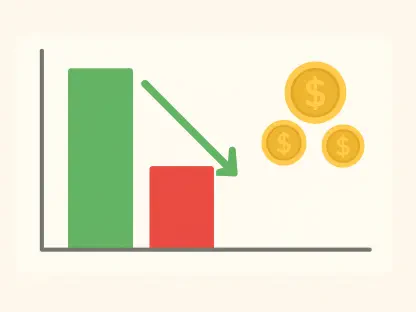
Every major insurance asset manager in Europe now deals with the reality of “stranded assets”—buildings that have become effectively unmarketable because they fail to meet evolving energy benchmarks. For those managing a collective €117 billion in property across the United Kingdom, Germany, France, and Italy, the stakes could not be higher. This transition is not a slow evolution but a sharp correction, with some properties experiencing valuation drops as high as 40 percent in just three years as the market rejects inefficient structures.
The Multibillion-Euro Price Tag of Poor Energy Performance
A simple energy rating has become the difference between a thriving asset and a severe financial liability. In the current economic climate, the operational cost of a building is scrutinized as closely as its rental yield. This shift is driven by the realization that energy performance is a direct indicator of future financial health, rather than a mere metric for sustainability reports. Buildings that fall behind modern standards are seeing their marketability evaporate as tenants and buyers alike prioritize efficiency.
Portfolio managers are now forced to reconcile with the fact that kilowatt-hours and carbon footprints are core drivers of valuation. The multibillion-euro price tag associated with inefficiency is no longer a theoretical projection; it is a current reality affecting thousands of commercial properties. As insurance funds and institutional investors look to de-risk their holdings, the buildings that fail to adapt are being left behind, creating a widening gap between high-performing green assets and their obsolete counterparts.
Theoretical Risk: The Shift to Balance Sheet Reality
For several years, the real estate industry viewed energy efficiency as a long-term goal or a reputational “nice-to-have.” However, shifting regulations and investor expectations across Europe have transformed these metrics into core drivers of financial liquidity. The emergence of stranded assets represents a systemic shift where buildings that exceed local energy consumption benchmarks are becoming increasingly difficult to lease or sell. This has moved the conversation from the marketing department directly to the balance sheet.
As capital value continues to erode, the connection between a building’s operational efficiency and its investment viability has become the most pressing concern for firms. The risk is no longer about potential future fines but about current market rejection. In a high-interest environment, the added burden of an energy-inefficient property can sink the profitability of an entire fund. Consequently, the industry has seen a massive reallocation of capital toward assets that can prove their long-term sustainability and operational low-cost.
The Financial Anatomy of the Modern Stranded Asset
The erosion of real estate value is being driven by a combination of diminished capital appeal and the rising cost of future compliance. Portfolios are currently burdened by properties that significantly overshoot energy consumption benchmarks for their specific locations and building types. This inefficiency creates a “brown discount,” where underperforming buildings are priced significantly lower than their green counterparts. This discount reflects the anticipated cost that any future buyer will have to pay to modernize the structure.
Furthermore, this trend is expected to worsen over the next five years. Market experts anticipate a 25 percent increase in the volume of stranded assets as energy standards tighten and market liquidity for inefficient space dries up. This financial anatomy of decay is particularly visible in older commercial districts where retrofitting is physically challenging. Without a clear path to efficiency, these buildings face a downward spiral of lower rents and higher vacancies that eventually leads to total obsolescence.
Data Analysis: Quantifying the Crisis Through Asset Manager Insights
Comprehensive research involving 80 leading insurance asset managers highlights the sheer scale of the problem: 100 percent of respondents admitted to holding assets that are currently losing value due to energy inefficiency. This isn’t a marginal issue, as 68 percent of these managers have deliberately avoided necessary upgrades to prevent disturbing their current occupiers. The data suggests that the market is now aggressively pricing in these risks, moving away from a time when poor energy performance could be masked by high demand for office space.
The consensus among experts is that a property’s energy profile is now a direct indicator of its long-term income stability and resale potential. When every single manager surveyed reports value loss, it indicates a structural change in the market rather than a temporary trend. This collective realization has led to a sense of urgency, yet the fear of tenant disruption remains a significant bottleneck. Managers are caught between the need to upgrade their portfolios and the practical reality of maintaining cash flow from existing leases.
Navigating the Transition: Low-Disruption Strategies
To mitigate value loss without the logistical nightmares of traditional construction, asset managers are pivoting toward software-driven solutions. Since 96 percent of firms plan to improve efficiency but fear the disruption of replacing HVAC or building management systems in “live” environments, remote optimization technology has become the preferred framework. By using software to adjust and fine-tune existing building systems without physical intervention, managers can target consumption reductions of 10 percent to 30 percent.
This approach allowed landlords to meet urgent decarbonization goals and protected property values while maintaining the tenant satisfaction and income stability required for successful asset management. The industry shifted toward a model where digital twins and real-time monitoring replaced the need for invasive structural changes. This transition prioritized data-led optimization over capital-intensive demolition, ensuring that the European real estate sector remained resilient in a demanding regulatory climate. Asset managers who adopted these remote strategies successfully stabilized their portfolios and avoided the most severe impacts of the brown discount.