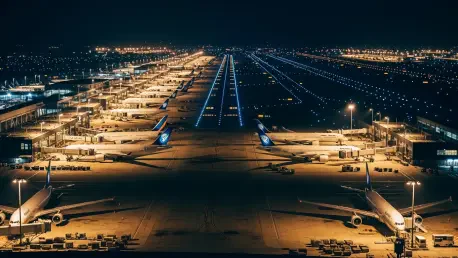

The sheer scale of a Boeing 777 descending toward the Dubai skyline represents more than just a logistical feat; it is a high-stakes calculation in a world where the cost of touching the tarmac is rapidly becoming unsustainable for most. As regional instability creates a fractured map of the Middle East, a profound financial divide has emerged between the carriers based in the Gulf and their international counterparts. While the global aviation community grapples with skyrocketing costs, Emirates has managed to secure a pricing structure that effectively insulates its operations from the surrounding volatility.
This divergence in insurance premiums has transformed from a back-office accounting detail into a defining competitive advantage. In a market where a single flight into a perceived risk zone can trigger surcharges equivalent to the price of a luxury home, the ability to mitigate these costs is a matter of strategic survival. As global airlines suspend routes to maintain their bottom lines, the Dubai flagship continues to navigate the crisis with a financial shield that few others can replicate.
The $100,000 Edge: A Multi-Billion Dollar Risk Zone
While international carriers are facing astronomical surcharges just to touch down in the Gulf, Emirates has secured a pricing structure that defies the current geopolitical climate. In an industry where a single flight can now trigger a $150,000 insurance premium, Dubai’s flagship carrier is covering its entire fleet for a fraction of that cost. This massive disparity in war risk insurance is not just a financial footnote; it is a strategic moat that allows Emirates to maintain dominance while rivals are forced to ground their planes.
The financial implications of this gap are staggering when scaled across a global network. For a European or Asian airline, the math of a single daily rotation into the region becomes nearly impossible to justify when the insurance premium alone eats up the profit margin of every seat on the aircraft. Consequently, many legacy carriers have opted for the safer, albeit less profitable, route of total service suspension, leaving a vacuum in one of the world’s most critical transit hubs.
Escalating Volatility and the Aviation Insurance Crisis
The Middle East aviation landscape is currently defined by a volatile mix of regional conflict and soaring operational overhead. As tensions between major regional powers intensify, the global specialty insurance market has responded by hiking rates to “show-stopper” levels for most operators. For many global airlines, the math of flying into the region no longer adds up, leading to a wave of service suspensions. Understanding how Emirates bypassed these market trends requires a look at the intersection of high-stakes finance and regional security frameworks.
Specialty underwriters in London and New York have become increasingly cautious, viewing every takeoff and landing in the region through a lens of potential total hull loss. This heightened sensitivity has created a “bifurcated” market where the perceived risk depends less on the flight path and more on the flag painted on the tail of the plane. While Western carriers are treated as high-risk liabilities, regional incumbents are benefiting from a different set of underwriting criteria.
The Mechanics of an Outrageous Pricing Advantage
The disparity between Emirates and its global competitors is rooted in unprecedented leverage and unique brokerage strategies. While competitors pay between $70,000 and $150,000 per flight, the deal secured by Emirates covers its whole fleet for roughly $100,000 per week. With assets worth tens of billions, the airline uses its scale to force insurers into a relationship-based pricing model where underwriters accept lower rates to keep the account.
Brokered by WTW, the $2 billion coverage limit pushes the boundaries of what the specialty insurance market can provide for a single entity. However, this arrangement is not without internal friction in the insurance world. Some major insurers have reportedly walked away from these deals, claiming the premiums no longer reflect the actual risk of hull loss or damage, creating a specialized niche where only the most aggressive underwriters are willing to participate.
Expert Perspectives: The Home-Field Advantage
Industry insiders and underwriters point to specific regional factors that allow Gulf-based carriers to operate under a different risk profile than their Western counterparts. Deep-seated ties between Gulf carriers, local air traffic control, and military authorities provide a level of risk mitigation that foreign airlines cannot replicate. These institutional connections ensure that regional carriers are the first to know of any tactical shifts, allowing for real-time route adjustments that satisfy the safety requirements of their specific policies.
Furthermore, the role of French and British military assets in monitoring the “tightly controlled corridors” used by flights departing from Dubai adds a layer of physical security that reassures underwriters. By maintaining high-volume operations even during peak periods of conflict, these airlines can negotiate bulk insurance packages. This “economies of scale” argument suggests that by flying more, they actually lower the per-flight risk profile in the eyes of their primary insurers.
Strategies for Navigating High-Risk Aviation Corridors
The success of Emirates provides a framework for how large-scale operators can survive regional instability through financial and operational maneuvering. Leveraging total fleet value to negotiate all-encompassing policies rather than per-flight surcharges remains a primary tactic. By moving away from transactional insurance, airlines can stabilize their operational costs even when the geopolitical situation on the ground remains highly unpredictable.
Investing in state-sponsored security infrastructure and utilizing advanced radar corridors has also proven essential for maintaining low premiums. Looking forward, the industry must consider how digital security and military-civilian coordination can be standardized to prevent the total exodus of international carriers during times of tension. The precedent set by this lopsided insurance market suggested that the future of global aviation may depend on creating more transparent, data-driven risk models that do not penalize carriers based solely on their geographic origin.