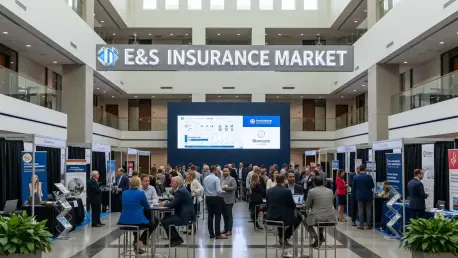

The global landscape of corporate liability has undergone a tectonic shift as traditional insurance providers increasingly distance themselves from the volatility of modern environmental and technological threats. This strategic movement is not merely a temporary adjustment but a fundamental realignment of how risk is perceived and managed in a rapidly evolving economy. As admitted carriers tighten their underwriting guidelines and narrow their appetites, the Excess and Surplus (E&S) market has transformed from a niche fallback into a primary engine of financial stability. This expansion marks a new chapter where flexibility and specialized knowledge dictate the terms of protection for the world’s most complex enterprises.
The importance of this transition lies in the widening gap between traditional insurance products and the sophisticated needs of modern businesses. Standard carriers, bound by rigid regulatory filings and historical pricing models, often find themselves unable to adapt to “dynamic” risks that lack decades of actuarial data. Consequently, the migration toward the E&S market represents a broader quest for resilience in an era defined by unpredictability. For brokers and risk managers, understanding this shift is no longer optional; it is the cornerstone of maintaining comprehensive coverage in a market that no longer rewards the status quo.
Redefining the Safety Net: Why Surplus Lines Are No Longer a Last Resort
Historically, the surplus lines market served as a destination for the “uninsurable”—risks so tainted by loss history or poor management that standard carriers refused them outright. However, the current environment has completely upended this hierarchy, positioning E&S insurers as the premier choice for innovative and high-growth sectors. These carriers operate with “freedom of rate and form,” allowing them to draft customized policy language that standard admitted forms simply cannot match. This agility is vital for businesses exploring frontiers where traditional safety nets have failed to provide adequate protection.
Moreover, the influx of business into the surplus lines sector includes a significant volume of high-quality, well-managed risks that have simply outgrown the standardized templates of the admitted market. Rather than a sign of failure, being “surplus” now indicates a level of complexity and sophistication that requires a more nuanced underwriting touch. Sophisticated buyers are increasingly opting for the E&S market to gain access to higher limits and broader terms that standard insurers have curtailed to protect their own balance sheets. This movement has solidified the E&S sector as a permanent and respected pillar of the global insurance infrastructure.
The Data Gap: Why Admitted Carriers Are Retreating From Emerging Risks
The primary catalyst for the current exodus of admitted carriers is an acute lack of historical loss data for emerging perils. Traditional insurance models rely on decades of documented claims to project future losses and set appropriate premiums. In contrast, the modern risk landscape is populated by “novel” threats, such as widespread cyber disruptions and evolving climate patterns, for which historical records are either non-existent or rapidly becoming irrelevant. Admitted carriers, facing pressure from state regulators to maintain stable and predictable rates, often choose to withdraw from these segments entirely rather than risk significant underwriting losses.
This retreat is further exacerbated by the speed at which new technologies disrupt established industries. When a standard carrier cannot accurately model the potential for a catastrophic event, its default posture is often one of extreme caution or total avoidance. This creates a data-driven vacuum that only E&S underwriters are equipped to fill. By utilizing real-time analytics and proprietary modeling techniques, surplus lines insurers can price risks that their admitted counterparts find too opaque. This proactive approach allows the insurance industry to remain relevant even as the nature of risk undergoes a profound and permanent transformation.
High-Tech Liabilities and Regulatory Bottlenecks Driving Market Migration
The explosive growth of generative artificial intelligence and autonomous systems has introduced a new tier of liability that traditional policies were never designed to address. Because the legal precedents for AI-driven errors and omissions are still being written in courtrooms, admitted carriers are hesitant to provide coverage that could lead to open-ended claims. The E&S market has stepped into this breach, offering tailored solutions that account for the unique algorithmic risks and data privacy concerns associated with high-tech operations. This willingness to innovate has made surplus lines the natural home for the burgeoning tech sector.
Furthermore, regulatory inconsistencies at the state and federal levels continue to push lucrative industries into the non-admitted space. A prime example is the cannabis industry, which remains a federal Schedule I substance despite widespread state legalization. Admitted carriers are often barred by their internal compliance departments or banking restrictions from engaging with these clients. E&S insurers, with their specialized legal frameworks and more flexible mandates, provide the essential coverage that allows these businesses to secure financing and manage their physical assets. This regulatory bottleneck has turned the E&S market into an indispensable partner for industries operating at the intersection of conflicting laws.
Selective Capacity and Heightened Scrutiny: Expert Outlook for 2026
As the market progresses through 2026, the availability of insurance capacity has become increasingly tied to the quality of a client’s risk mitigation efforts. While there is ample capital within the E&S sector, underwriters are exercising a level of selectivity rarely seen in previous cycles. Property owners in coastal regions or areas prone to wildfires are facing rigorous inspections and are often required to demonstrate significant investments in resilience before receiving a quote. This era of heightened scrutiny ensures that only the most prepared organizations can access the full capacity of the surplus lines market.
Inflationary pressures and rising reinsurance costs have also forced E&S carriers to prioritize disciplined pricing over market share. Underwriters are looking far beyond simple balance sheets, demanding granular data on supply chain dependencies and building materials. This shift means that the “cheap” coverage once available in softer markets has been replaced by a focus on sustainable, long-term partnerships. For the remainder of 2026, the market is expected to reward transparency and data-rich applications, while those with opaque risk profiles may find themselves facing significantly higher deductibles or limited sub-limits on critical perils.
Winning the Quote: Proactive Strategies for Modern Risk Management
Securing favorable terms in the 2026 insurance environment required a fundamental pivot toward transparency and early engagement between all stakeholders. Organizations that successfully navigated the migration to the E&S market moved beyond the traditional “submission and wait” mentality. Instead, they adopted a strategy of radical transparency, providing underwriters with detailed narratives that explained not just what the risks were, but how they were being actively managed and mitigated. This proactive posture turned the insurance renewal process from a transactional necessity into a strategic advantage for the most resilient firms.
Risk managers and brokers who thrived in this landscape prioritized the human element of the underwriting relationship. They initiated conversations months in advance of renewal dates, ensuring that carriers had ample time to digest complex technical data. By focusing on the quality of the risk and the strength of internal safety protocols, these professionals secured coverage that provided both breadth and stability. Ultimately, the successful transition to a surplus-dominated market proved that the best defense against a retreating standard market was a robust and well-documented offense. The focus shifted away from price hunting and toward building sustainable partnerships that could withstand the continued evolution of global risk.