
The delicate equilibrium of global energy distribution currently hinges on the volatile waters of the Strait of Hormuz, where nearly twenty percent of the world’s liquid petroleum passes through a narrow corridor fraught with geopolitical tension. As maritime threats evolve from traditional piracy to sophisticated drone strikes and state-sponsored seizures, the insurance industry has been forced to innovate beyond conventional war-risk premiums. Lloyd’s of London recently launched a specialized consortium designed specifically to address the unique perils of this Arabian Gulf bottleneck, signaling a shift toward proactive risk management. This initiative aims to provide massive capacity for hull and cargo coverage while simultaneously implementing rigorous safety protocols for transiting vessels. By pooling resources from elite syndicates, the consortium hopes to stabilize fluctuating freight rates that have historically spiked during regional skirmishes. However, the true test lies in whether financial backing can actually deter physical aggression or merely serve as a high-stakes buffer for an industry that cannot afford to stop moving.
The Insurance Framework: Strengthening Financial Resilience
The consortium functions by consolidating capital from several high-performing syndicates to offer a unified front against the rising costs of war-risk insurance in the Middle East. This collective approach allows for a “lead-follow” model where primary experts set the pricing based on granular intelligence, while secondary participants provide the depth of capital necessary to cover supertankers worth hundreds of millions of dollars. Unlike previous fragmented efforts, this 2026 framework establishes a standardized set of requirements for shipowners, mandating specific onboard security measures and route compliance in exchange for preferential rates. By centralizing the underwriting process, the market gains a level of predictability that was previously absent during periods of high regional friction. This stability is crucial for oil majors and independent operators who must plan their logistics cycles months in advance without the constant fear of sudden, prohibitive insurance hikes that could derail the economic viability of a single voyage.
Beyond mere financial hedging, this new structure emphasizes a shift toward rigorous loss prevention through shared intelligence networks that link insurers directly with maritime security firms. Member syndicates are now utilizing proprietary data feeds to analyze historical incident patterns, allowing them to adjust coverage terms dynamically as the threat level fluctuates from day to day. This strategy effectively creates a tiered system of security where vessels that invest in hardened defenses—such as non-lethal deterrents or reinforced bridge protection—receive significant discounts on their premiums. Furthermore, the consortium has established a dedicated response fund to expedite salvage operations and crew repatriations in the event of a kinetic engagement. This holistic view of risk ensures that the insurance industry is no longer just a passive observer of regional conflict but an active participant in shaping the safety standards that define international shipping in high-risk zones.
Technological Integration: Establishing a Proactive Defensive Posture
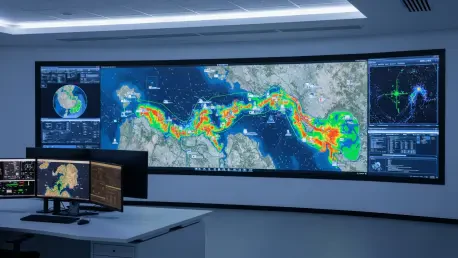
Success in the Strait of Hormuz depends heavily on the integration of advanced technologies that provide a comprehensive view of the maritime domain beyond what traditional radar can offer. The consortium has mandated the use of enhanced Automatic Identification System (AIS) protocols, coupled with low-earth orbit satellite constellations that track vessel movements with sub-meter accuracy. These digital tools allow underwriters to verify that ships are adhering to designated “safe corridors” and avoiding areas known for unauthorized boardings or mine-laying activities. Artificial intelligence algorithms now process vast amounts of oceanic data, identifying anomalous behavior in nearby fishing vessels or non-commercial craft that might signal a looming threat. By utilizing machine learning to predict potential flashpoints, the insurance pool can issue real-time alerts to captains, providing them with the necessary minutes to enact defensive maneuvers or seek naval assistance. This tech-centric approach transforms the policy from a static document into a live security asset.
The resulting ecosystem fostered a culture of visibility that discouraged aggression by making clandestine operations nearly impossible to hide. Moving forward, stakeholders prioritized the standardization of these digital security protocols across all major global chokepoints to ensure a unified defensive posture. It became evident that long-term stability required a continued investment in interoperable communication systems between private security contractors and international naval task forces. Shipping companies were encouraged to undergo quarterly audits of their cybersecurity defenses to prevent the remote hijacking of navigation systems by non-state actors. Ultimately, the consortium demonstrated that financial resilience was inextricably linked to technological superiority and transparent data sharing. Organizations that adopted these integrated strategies effectively insulated themselves from the worst effects of regional instability. These measures established a new benchmark for maritime safety that went beyond simple insurance, creating a proactive framework for global trade protection.