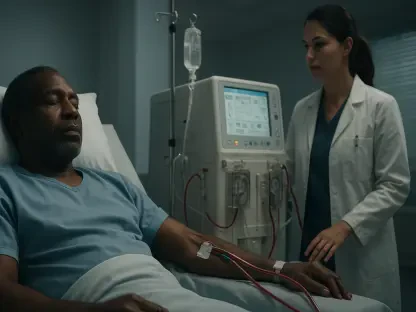

A single memory from a six-week job half a century ago can feel decisive to a dying patient, yet in court it can evaporate under the heat of documents, site visits, and science. That is the tension that played out when Zurich Insurance faced a mesothelioma claim brought under the Third Parties (Rights Against Insurers) Act 2010, a case that pressed the limits of how far recollection can stretch to fill gaps left by time.
The claimant, William Walter Howell, was diagnosed with epithelioid malignant mesothelioma in 2024 and alleged asbestos exposure during a brief 1972 laboring stint for Pile Construction (Southern) Limited. With the employer dissolved and damages agreed in principle, the dispute narrowed to causation alone, focusing on whether his decades-old memories could carry the civil standard of proof.
Why This Topic Matters Now
Long-latency diseases like mesothelioma collide with long-tail litigation, creating cases that hinge on evidence from distant years. As files thin and buildings change hands, the proof problem intensifies: who did what, where, and with which materials becomes harder to reconstruct, even as diagnosis brings urgency and moral weight.
The 2010 Act clears a procedural path to insurers when employers vanish, but it does not bend causation. Coverage acceptance only opens the courtroom door; it does not decide what happened on the job site. Courts still ask whether exposure is shown on the balance of probabilities and whether competing explanations are ruled out.
Judges weigh internal consistency, corroboration, and plausibility when memories age. Research on reconstructive recall has seeped into legal practice; as one expert said in this case, “asbestos has no distinctive smell,” undercutting sensory anchors witnesses often trust. Drift in detail becomes a signal of risk rather than a harmless blur.
Inside the Case: Memory Versus Measurable Facts
Howell’s account began with a specific claim: six weeks in 1972, laboring at what he believed was Great Ballard School in West Sussex, cutting asbestos insulating board and using offcuts as a makeshift hotplate. Earlier signed statements, however, had named a different school, a different year, and a different set of tasks. On the eve of trial the site became “less likely,” and by the first day it was “unlikely,” with no substitute location identified.
Zurich pressed into the gaps with anchors. An asbestos survey of the school hall in 2004–2005 reported no asbestos in the structure. Their expert, Ms. Tierney, inspected the site and found no signs of historical asbestos removal—no scarring, no witness marks, no disturbed voids. The hall’s owner and a builder who worked on a 1990s extension independently reported encountering no asbestos during their projects.
Technical analysis further tightened the ring. Experts agreed that asbestos has no distinctive smell, undermining the claimed olfactory memory. They also agreed that asbestos insulating board would not function as a food-heating hotplate. Tierney added building-science context: a small, single-story hall with exposed timber beams in 1972 would not typically require asbestos-based fireproofing, and lighter, cheaper plasterboard had long been available for the job.
Expert Voices and Judicial Lens
The expert consensus did not merely prick the story; it reframed what plausibility meant. When one expert noted, “asbestos has no distinctive smell,” the court received more than a quibble—it gained a benchmark to test the reliability of a key sensory claim. Likewise, the hotplate assertion failed against basic material properties, turning a vivid detail into a credibility drag.
Deputy Judge O’Mahony approached the testimony through the settled lens that long-term memories are vulnerable to reconstruction. The court acknowledged the human cost and expressed sympathy, yet emphasized that coherence, corroboration, and fit with objective conditions matter most. Internal contradictions—site, year, tasks—were not minor lapses; they were signals that the account could not safely carry causation.
Site-based and documentary checks acted as real-world controls. The negative asbestos survey, the absence of removal traces, and the owner and builder accounts aligned with expert opinion and with what the structure revealed. Against that composite, memory alone could not tip the balance of probabilities.
Lessons That Travel Beyond One Claim
The judgment offered a practical map for future litigants. For claimants, the path forward ran through early anchoring of memories to verifiable locations, dates, and materials; the swift retrieval of surveys, planning files, and maintenance logs; and transparent documentation of uncertainty before positions hardened. For insurers and defense teams, it confirmed the value of targeted site inspections, period-appropriate construction analysis, and meticulous tracking of statement drift.
Beyond tactics, the case suggested that multidisciplinary verification was not an advantage but a necessity in mesothelioma causation disputes. Courts preferred multi-source corroboration over aged recollection when the two parted ways. As the ruling closed, it distilled a clear principle: sympathy was not a substitute for proof, and the civil standard still asked claimants to show that exposure more likely than not occurred at a particular place, in a particular way, at a particular time.